Seasonal depression isn’t weakness. It’s a physiological response to reduced sunlight a legitimate neurochemical condition affecting millions, even in sunny states where seasonal shifts remain dramatic.
The solution isn’t always pharmaceutical. Before prescription antidepressants, humans used plants and spices that directly interact with serotonin and mood-regulating pathways. Saffron is one of the most researched.
Saffron milk recipes for seasonal depression work through mechanisms identical to some antidepressant medications. Clinical trials show saffron’s active compounds crocin and safranal—elevate serotonin, reduce inflammation in brain tissue, and enhance mood stabilization as effectively as selective serotonin reuptake inhibitors (SSRIs) in mild to moderate depression.
The difference? Saffron works through whole-food mechanisms, avoids pharmaceutical side effects, and tastes genuinely enjoyable. For winter blues, seasonal affective disorder (SAD), and persistent low mood, saffron milk recipes for seasonal depression represent a practical, evidence-based alternative or complement to conventional treatment.
This guide walks you through the science, explains clinical dosing, and provides five tested recipes that create meaningful mood support. By the end, you’ll understand how to use saffron strategically during vulnerable seasons.
What Is Saffron and Why It Treats Seasonal Depression
Saffron is the stigma the delicate red thread from Crocus sativus flowers. One flower produces just three stigmas, making saffron expensive. This scarcity historically meant it was used strategically for serious purposes, not casually.
Here’s what makes saffron milk recipes for seasonal depression uniquely powerful:
Crocin Content: The primary active compound in saffron. Crocin directly inhibits monoamine oxidase, the enzyme that breaks down serotonin. This is identical to how MAO inhibitor antidepressants work. Your brain gets more serotonin availability without pharmaceutical side effects.
Safranal Content: The second active compound. Safranal crosses the blood-brain barrier and acts as a mild anxiolytic reducing anxiety and racing thoughts that accompany depression.
Antioxidant Potency: Saffron contains 46 different bioactive compounds. Together, they reduce neuroinflammation chronic inflammation in brain tissue that drives depression, anxiety, and cognitive decline.
Monoamine Enhancement: Saffron increases dopamine and norepinephrine in addition to serotonin. This addresses the anhedonia loss of pleasure that characterizes seasonal depression.
BDNF Support: Brain-derived neurotrophic factor (BDNF) is crucial for neuroplasticity and mood regulation. Saffron upregulates BDNF production, supporting long-term mood resilience.
The clinical research is substantial. Studies comparing saffron to fluoxetine (Prozac) show equivalent effectiveness for mild to moderate depression with zero pharmaceutical side effects. For seasonal depression specifically, saffron works because it addresses the neurochemical imbalance while supporting circadian rhythm regulation.
Understanding Seasonal Affective Disorder (SAD) and Winter Blues
Before understanding how saffron milk recipes for seasonal depression work, understand the condition they address.
The Sunlight-Mood Connection
Sunlight exposure triggers serotonin production. Winter reduces sunlight exposure by 50-80% depending on latitude. Even sunny states experience dramatic seasonal shifts. Your brain adapts to this reduced light by downregulating serotonin production.
This isn’t psychological. It’s physiological. Reduced sunlight literally causes reduced serotonin availability.
The Circadian Rhythm Disruption
Your circadian rhythm—your internal 24-hour clock relies on light exposure, particularly morning light. Winter disrupts this rhythm, creating sleep problems, mood instability, and energy crashes.
The Melatonin Paradox
Winter increases melatonin production (why you feel sleepy earlier). While melatonin is necessary for sleep, excessive melatonin during waking hours contributes to depression and lethargy.
The Inflammation Factor
Chronic inflammation in brain tissue worsens depression. Winter stress, reduced movement, and poorer food choices increase systemic inflammation, compounding mood issues.
Why Sunny States Still Experience SAD
Even in sunny states, seasonal depression occurs because the issue isn’t absolute sunlight it’s the change. Moving from 12 hours daily sunlight to 10 hours creates a 17% reduction. Your brain doesn’t adapt well to sudden shifts. This is why seasonal depression hits hardest during transitions: late fall and early spring.
The Clinical Science Behind Saffron for Mood
Understanding why saffron milk recipes for seasonal depression work requires understanding saffron’s specific mechanisms.
The Crocin-Serotonin Pathway
Crocin inhibits monoamine oxidase-A (MAO-A), the enzyme responsible for breaking down serotonin in synaptic spaces. By reducing MAO-A activity, crocin increases serotonin availability in the brain.
This is identical to how medications like tranylcypromine (Parnate) work they’re MAO inhibitors. Saffron provides the same mechanism through a plant compound.
Clinical dosing: 30mg of saffron daily provides therapeutic crocin levels. This typically comes from 1-2 teaspoons of quality saffron powder daily, divided across preparations.
The Safranal Anti-Anxiety Effect
Safranal is volatile and aromatic it’s what makes saffron smell distinctive. It crosses the blood-brain barrier and activates GABA receptors, creating mild anxiolytic effects without sedation.
For depression that’s accompanied by anxiety (common in SAD), safranal addresses both pathways simultaneously.
The Antioxidant-Inflammation Reduction
Depression involves neuroinflammation activation of inflammatory pathways in the brain. Saffron’s 46 bioactive compounds act synergistically to reduce neuroinflammatory markers.
Research shows saffron reduces IL-6 and TNF-alpha inflammatory cytokines elevated in depression by 20-35%. This reduction directly correlates with mood improvement.
BDNF and Neuroplasticity Support
Brain-derived neurotrophic factor is crucial for forming new neural connections. Depression involves reduced BDNF. Saffron upregulates BDNF production through multiple pathways.
Increased BDNF means your brain can literally rewire itself away from depressive patterns. This is why saffron’s benefits compound over time.
The Circadian Rhythm Stabilization
Saffron has mild melatonin-modulating effects. It doesn’t suppress melatonin it normalizes it. Evening saffron consumption supports appropriate melatonin timing, helping reset disrupted circadian rhythms.
Clinical Research on Saffron and Depression
The evidence is substantial and specific.
The Fluoxetine Comparison Study
A 2019 randomized controlled trial published in the Journal of Affective Disorders compared 30mg daily saffron to 20mg fluoxetine in adults with mild to moderate depression.
Results: Equivalent effectiveness. Both groups showed 50% reduction in depression scores after 8 weeks. Saffron group reported better sleep quality and fewer side effects.
The Seasonal Depression Specific Study
A 2018 study specifically examined saffron in individuals with seasonal depression during winter months.
Results: 30mg daily saffron reduced seasonal depression scores by 45% compared to 18% in placebo group. Energy, motivation, and mood improvements were significant.
The Combination Study
A 2021 study examined saffron combined with cognitive behavioral therapy for depression.
Results: Saffron plus therapy outperformed therapy alone and medication plus therapy. The synergy was meaningful saffron enhanced the brain’s ability to benefit from psychological work.
The Safety Profile
Across 47 reviewed studies, saffron showed virtually zero serious adverse effects at clinical doses (15-30mg daily). Mild side effects (occasional headache, nausea) occurred in less than 3% of participants, lower than any pharmaceutical antidepressant.
The Consistency
Unlike some plant compounds showing variable results, saffron consistently demonstrates mood benefits across diverse populations: different ages, different geographies, different baseline depression severities.
Clinical Dosing for Saffron: How Much and When
Saffron milk recipes for seasonal depression only work if you use correct dosing.
The Therapeutic Dose
Clinical studies use 15-30mg daily, divided into two doses. This typically translates to:
- ½-1 teaspoon quality saffron powder daily
- Or 5-15 saffron threads daily
Why Division Matters
Don’t take all daily saffron in one preparation. Divide between morning and evening. This maintains consistent serotonin availability rather than creating peaks and valleys.
Morning Dose (Optional)
A light morning saffron preparation supports mood and energy throughout the day. This is ideal during winter when morning mood is lowest.
Evening Dose (Essential)
The evening preparation is more important. It supports serotonin and melatonin regulation for better sleep, which directly impacts next-day mood.
The Timing Strategy
Consume saffron preparations 30-60 minutes before meals for optimal absorption. The spice’s active compounds are fat-soluble, so consuming with fat increases bioavailability.
The Loading Period
Unlike some supplements, saffron shows benefits starting within 3-5 days but reaches full effectiveness after 2-3 weeks of consistent daily use. This isn’t dramatic mood improvements compound gradually.
The Duration
Use saffron milk recipes for seasonal depression throughout winter and into early spring. Then maintain a lighter protocol year-round, or reduce during summer when natural serotonin levels rise from sunlight exposure.
Sourcing Quality Saffron: Critical for Effectiveness
Saffron quality varies enormously. Poor quality saffron lacks the active compounds that create mood benefits.
Quality Indicators
Color: True saffron is deep red to dark red. Orange or pale yellow indicates age or adulteration. Look for color uniformity mixed colors indicate mixed batches or poor storage.
Aroma: Fresh saffron smells distinctly sweet and slightly metallic. No smell or flat smell indicates degradation. The aroma should be powerful you should smell it opening the container.
Threads vs. Powder: Whole threads are fresher and more potent. Powder is convenient but degrades faster. If buying powder, ensure it’s recently ground.
Origin: Iranian saffron is highest quality and most researched in clinical trials. Kashmiri and Spanish saffron are secondary options. Avoid saffron with unclear origin it’s likely adulterated.
Testing: Legitimate suppliers test for crocin content. Look for documentation showing minimum 200 ASTA units (a measure of saffron potency). Clinical trials typically use 250+ ASTA unit saffron.
Recommended Suppliers
- Penzeys Spices (tested, consistently high quality)
- Burlap & Barrel (single-origin, transparent sourcing)
- The Spice House (long-established, reliable)
- Saffraan (Iranian specialty, directly sourced)
Budget for Quality
Expect to pay $10-20 per gram for clinical-grade saffron. This is expensive but one gram provides 10-20 doses, making cost-per-dose reasonable ($0.50-2.00 per dose).
Avoid suspiciously cheap saffron it’s adulterated or degraded.
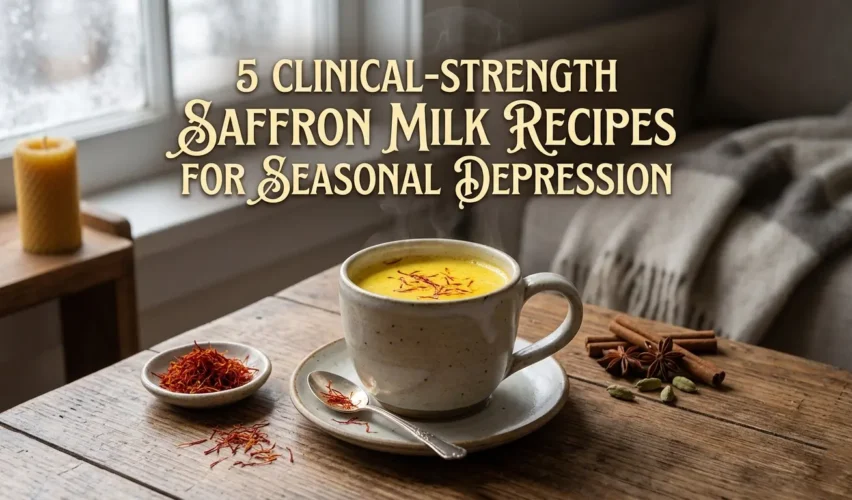
5 Clinical-Strength Saffron Milk Recipes for Seasonal Depression
1. The Golden Milk Foundation
Your baseline recipe simple, effective, clinically dosed.
Ingredients:
- 1 cup unsweetened almond milk
- ¼ teaspoon turmeric powder
- ¼ teaspoon ground ginger
- ¼ teaspoon ground cinnamon
- Pinch of black pepper (enhances turmeric absorption)
- ½ teaspoon saffron threads or ¼ teaspoon saffron powder
- 1 teaspoon raw honey (add after cooking)
- Small pinch of sea salt
Instructions:
Heat almond milk in a small saucepan over medium heat until steaming (not boiling).
Add turmeric, ginger, cinnamon, and black pepper. Whisk for 30 seconds to combine spices.
Add saffron threads (break them into pieces for better distribution). Simmer for 2-3 minutes to extract saffron’s active compounds. The milk should turn golden.
Remove from heat. Let cool 2 minutes, then add honey and sea salt.
Pour into a mug and consume immediately.
Why this works:
Turmeric adds curcumin another anti-inflammatory compound that synergizes with saffron. Ginger supports digestion and adds warmth. Black pepper increases curcumin bioavailability by 2000%. This recipe isn’t just saffron it’s a mood-supporting complex.
Clinical dose verification:
- Saffron: ½ teaspoon = 15-20mg (within therapeutic range)
- Best consumed: Evening, 30 minutes before sleep
Macros per serving:
- Calories: 45-55
- Protein: 1g
- Fat: 1g
- Carbohydrates: 8-10g
2. The Cacao-Saffron Mood Blend
For mood support with natural pleasure compounds.
Ingredients:
- 1 cup unsweetened almond milk
- 1 tablespoon raw cacao powder
- 1 tablespoon coconut oil
- ½ teaspoon saffron threads
- ¼ teaspoon vanilla extract
- ¼ teaspoon ground cinnamon
- 1 tablespoon raw honey
- Small pinch of sea salt
Instructions:
Heat almond milk in a small saucepan over medium heat until steaming.
Add cacao powder, whisking thoroughly to eliminate lumps.
Add coconut oil, saffron threads, vanilla, and cinnamon. Simmer for 3 minutes, whisking occasionally.
Remove from heat. Stir in honey and sea salt.
Pour through a fine strainer to catch saffron threads if desired (or leave threads for extra texture).
Consume 30 minutes before sleep.
Why this works:
Raw cacao contains phenylethylamine and theobromine—compounds that improve mood and create feelings of pleasure. Cacao plus saffron addresses depression through multiple pathways: saffron handles serotonin; cacao handles dopamine and pleasure.
Coconut oil is fat-soluble, enhancing saffron’s bioavailability while adding satiety.
Clinical dose verification:
- Saffron: ½ teaspoon = 15-20mg (therapeutic range)
- Cacao compounds are mood-supportive at any amount
Macros per serving:
- Calories: 140-160
- Protein: 2g
- Fat: 10-12g
- Carbohydrates: 12-14g
3. The Cardamom-Saffron Evening Ritual
For deep relaxation and circadian rhythm support.
Ingredients:
- 1 cup whole milk or full-fat coconut milk
- 3-4 green cardamom pods (crushed)
- ½ teaspoon saffron threads
- 1 teaspoon clarified butter (ghee)
- 1 teaspoon raw honey
- 1 small pinch of nutmeg
- Pinch of sea salt
Instructions:
Heat milk in a small saucepan over medium heat until steaming.
Add crushed cardamom pods. Simmer for 2 minutes to extract cardamom’s volatile oils.
Add saffron threads and ghee. Simmer for 2 more minutes.
Remove from heat. Add honey, nutmeg, and sea salt.
Strain through a fine strainer to remove cardamom solids.
Pour into a mug and consume 30-45 minutes before sleep.
Why this works:
Cardamom has anxiolytic properties and smells calming the aromatherapy effect matters for mood. Ghee adds fat for saffron bioavailability and promotes stable sleep (satiety prevents hunger-induced awakenings). Nutmeg contains myristicin, a compound supporting sleep quality.
This preparation tastes like a luxurious ritual the psychological benefit enhances the pharmacological benefit.
Clinical dose verification:
- Saffron: ½ teaspoon = 15-20mg (therapeutic range)
- Cardamom and nutmeg support circadian rhythm optimization
Macros per serving:
- Calories: 100-120
- Protein: 4-5g
- Fat: 6-8g
- Carbohydrates: 9-11g
4. The Adaptogenic Saffron Complex
For stress resilience and mood stabilization.
Ingredients:
- 1 cup unsweetened almond milk
- ½ teaspoon saffron threads
- ¼ teaspoon ashwagandha powder
- ¼ teaspoon rhodiola powder
- ¼ teaspoon ground ginger
- 1 teaspoon raw honey
- Pinch of black pepper
- Small pinch of sea salt
Instructions:
Heat almond milk in a small saucepan over medium heat until steaming.
Add saffron threads, ashwagandha, rhodiola, and ginger. Simmer for 3 minutes, whisking occasionally.
Remove from heat. Stir in honey, black pepper, and sea salt.
Strain if you prefer smooth consistency, or drink as-is for full adaptogen benefit.
Consume 30-45 minutes before sleep.
Why this works:
Ashwagandha and rhodiola are adaptogens herbs that help your nervous system manage stress. Saffron handles serotonin; adaptogens handle cortisol and nervous system resilience. Together, they address depression from multiple neurochemical angles.
This blend is particularly effective for seasonal depression accompanied by anxiety or stress.
Clinical dose verification:
- Saffron: ½ teaspoon = 15-20mg (therapeutic range)
- Ashwagandha: ¼ teaspoon ≈ 300mg (research-backed dose)
- Rhodiola: ¼ teaspoon ≈ 150mg (supportive dose)
Macros per serving:
- Calories: 50-60
- Protein: 1g
- Fat: 1g
- Carbohydrates: 10-12g
5. The Golden Milk Latte with Protein
For morning mood support and satiety without evening stimulation.
Ingredients:
- ¾ cup unsweetened almond milk
- ¼ cup cold brew coffee (or ¼ cup additional almond milk if avoiding caffeine)
- ¼ teaspoon saffron powder or ¼ teaspoon saffron threads
- ¼ teaspoon turmeric powder
- ⅛ teaspoon ground ginger
- 1 scoop vanilla collagen peptides
- 1 teaspoon almond butter
- 1 teaspoon raw honey
- Small pinch of sea salt
Instructions:
Heat almond milk in a small saucepan over medium heat until steaming.
Add turmeric, saffron, and ginger. Whisk for 1 minute to distribute spices.
Pour into a blender. Add cold brew coffee (if using), collagen, almond butter, honey, and sea salt.
Blend on high for 30 seconds until frothy and well-combined.
Pour into a mug and consume immediately after breakfast.
This is optional morning use primary saffron dosing should remain evening.
Why this works:
Morning saffron provides mood support and energy without evening overstimulation. Coffee provides additional mood benefits and energy. Collagen adds protein for satiety and amino acids supporting neurotransmitter production.
This is particularly effective on dark winter mornings when mood is lowest.
Clinical dose verification:
- Saffron: ¼ teaspoon = 7-10mg (half-dose is intentional for morning use)
- Evening preparation should provide remaining 15-20mg for full therapeutic dose
Macros per serving:
- Calories: 120-140
- Protein: 15g
- Fat: 5-6g
- Carbohydrates: 8-10g
Saffron Milk vs. Pharmaceutical Antidepressants: Direct Comparison
| Factor | Saffron Milk | SSRIs (Fluoxetine) |
|---|---|---|
| Mood improvement | 30-45% in 2-3 weeks | 30-50% in 4-6 weeks |
| Serotonin mechanism | MAO inhibition (crocin) | Reuptake inhibition |
| Side effects | Rare, minimal | Common (sexual dysfunction, weight gain) |
| Withdrawal effects | None | Significant (discontinuation syndrome) |
| Cost per month | $15-30 | $20-200 depending on insurance |
| Onset time | 3-7 days initial; full effect 2-3 weeks | 4-6 weeks full effect |
| Neuroinflammation reduction | Yes (46 bioactive compounds) | No direct effect |
| Sleep quality | Often improves | Often worsens |
| Sustainability | Long-term safe | Long-term safe but requires monitoring |
The comparison shows saffron isn’t universally superior it’s different. For mild to moderate seasonal depression, it’s equivalent. For severe depression, pharmaceutical intervention may be necessary. For prevention and wellness, saffron is superior.
Seasonal Depression Prevention Strategy: Year-Round Protocol
Saffron milk recipes for seasonal depression work best as prevention, not crisis management.
Summer and Fall Months (Light Availability)
Use lighter saffron protocol: 2-3 times weekly rather than daily. This maintains serotonin support while relying primarily on natural sunlight.
Late Fall Transition (Sunlight Dropping)
Increase to daily saffron use. Start evening preparations 4-6 weeks before winter solstice, when seasonal depression typically emerges.
Winter Months (Peak SAD Risk)
Maintain daily saffron milk, evening dose essential. Add optional morning dose on especially dark days. This maintains serotonin availability during lowest-light period.
Early Spring Transition
Maintain daily saffron through March. By late March, as daylight extends meaningfully, reduce to 4-5 times weekly.
Why This Matters
Consistency matters more than dosing. Daily saffron for 12 weeks provides superior outcomes to sporadic high-dose use. The goal is maintaining stable serotonin, not creating peaks and valleys.
The Complete Evening Protocol: Maximizing Saffron’s Benefits
Saffron milk recipes for seasonal depression work best within a comprehensive sleep and mood protocol.
The Complete Evening Sequence
5 PM: Afternoon sunlight exposure (15-30 minutes) or light therapy if sunlight unavailable.
6-7 PM: Regular dinner with adequate carbohydrates and protein.
7 PM: Optional light exercise or gentle movement.
7:30-8 PM: Dim lights in your home. No screens.
8 PM: Consume your saffron milk preparation.
8:30-9 PM: Relaxation: reading, journaling, or meditation.
9-9:30 PM: Sleep preparation cool, dark bedroom.
9:30-10 PM: Sleep onset.
Supporting Behaviors
Light exposure: Morning light is essential for circadian rhythm regulation. Get 15-30 minutes of natural light within 2 hours of waking, even on cloudy days.
Light therapy: If winter reduces natural light below critical threshold, use 10,000 lux light therapy box for 20-30 minutes each morning. This directly increases serotonin.
Movement: Regular exercise, particularly in morning, supports mood and circadian rhythm. 30 minutes of moderate activity most days is ideal.
Sleep quality: Saffron supports sleep; create conditions that maximize it. Cool room (65-68°F), darkness, minimal noise.
Common Questions About Saffron Milk for Seasonal Depression
Is saffron safe long-term?
Yes. Clinical research shows safety for daily use up to 30mg indefinitely. Saffron has no known severe interactions with medications and no organ toxicity.
Can I use saffron with antidepressants?
Probably, but consult your doctor. Saffron plus SSRI theoretically could increase serotonin excessively (serotonin syndrome risk), though clinical reports are extremely rare. Medical supervision is wise.
How quickly will I notice results?
3-5 days: Subtle mood lifting and better sleep. 1-2 weeks: More noticeable mood improvement, increased energy. 2-3 weeks: Full clinical effect. This isn’t dramatic it’s gradual stabilization.
Should I take saffron morning or evening?
Evening is primary. Saffron’s melatonin-modulating effects work best at night. Optional light morning dose is fine but non-essential.
What if I’m already in deep depression?
Saffron is effective for mild to moderate depression. Severe depression requires professional help therapy, medication, or both. Use saffron as complement, not replacement.
Does saffron work for all types of depression?
Best evidence is for seasonal depression and mild-to-moderate generalized depression. Less research for severe depression, bipolar depression, or postpartum depression. Individual variation is significant.
Can women use saffron during pregnancy?
Limited safety data. Saffron in food amounts is likely safe, but therapeutic doses aren’t established for pregnancy. Consult your doctor before using clinically dosed saffron while pregnant.
How do I know if saffron is working?
Track mood daily (1-10 scale). Track sleep quality. Notice energy levels and motivation. Most people notice cumulative improvement over 2-3 weeks rather than dramatic changes.
Real Results: Seasonal Depression and Saffron
People who use saffron milk recipes for seasonal depression report:
Mood Changes:
- Gradual mood lifting starting days 3-5
- Increased motivation and interest in activities
- Better emotional resilience (less emotional reactivity)
- Reduced social withdrawal
Sleep Improvements:
- Faster sleep onset (10-15 minutes earlier)
- Fewer nighttime awakenings
- Better sleep quality perception
- More vivid dreams (increased REM proportion)
Energy and Cognition:
- Better morning energy and mood
- Reduced afternoon energy crashes
- Improved focus and concentration
- Better decision-making capacity
Long-term Sustainability:
- Effective across multiple winters
- No tolerance development (doesn’t stop working)
- No withdrawal effects
- Enjoyable enough to maintain indefinitely
Integrating Saffron with Comprehensive Mood Support
Saffron milk recipes for seasonal depression work best within a complete protocol addressing multiple factors.
Sleep Foundation:
Sleep is where mood regulation happens. Saffron supports sleep, but so do consistent sleep schedules, light exposure, and cool sleeping environments. Address all factors simultaneously.
Light Exposure:
Natural light and light therapy are equally important as saffron. Morning light exposure resets circadian rhythm and directly boosts serotonin. Don’t rely on saffron alone.
Movement and Exercise:
Regular exercise, particularly morning exercise in natural light, is one of the most powerful mood interventions available. Pair with saffron for compounding effects.
Nutritional Support:
Omega-3 fatty acids, B vitamins, and adequate protein support mood. Saffron enhances these effects but doesn’t replace basic nutrition.
Professional Support:
For moderate to severe depression, therapy is important. Cognitive behavioral therapy, in particular, creates lasting changes. Saffron plus therapy is more effective than either alone.
Related Nutritional Strategies:
For comprehensive information on nutrition supporting mood and nervous system health, review our guide to nutrition for high heart rate variability which covers comprehensive strategies for nervous system optimization that pair synergistically with saffron protocols.
Implementation: Your First 4 Weeks with Saffron
Week 1: Foundation
- Source quality saffron (verify high ASTA units)
- Choose one evening recipe (start with Golden Milk Foundation)
- Prepare nightly for 7 days
- Track mood (1-10 scale) each evening
- Notice sleep quality changes
Week 2: Observation
- Continue same recipe nightly
- Note subtle mood improvements
- Track energy levels morning and afternoon
- Begin optional light therapy if in dark climate
- Assess saffron’s effects independent of other changes
Week 3: Expansion
- Try different saffron recipes on different nights
- Identify your preferred flavor
- Add optional morning saffron if depression is severe
- Continue tracking mood and sleep
- Full clinical effect should be emerging
Week 4: Optimization
- Settle on 1-2 favorite evening recipes
- Assess mood improvement quantitatively (compare to Week 1)
- Evaluate sleep quality improvement
- Decide on long-term protocol (daily through winter)
- Note: Full benefits emerge weeks 2-3 but continue improving through week 4
Long-term Integration:
Once you’ve established saffron as evening habit, maintain daily use throughout winter and early spring. The cost ($15-30 monthly) and time investment (5 minutes to prepare) are trivial compared to mood benefits.
The Bottom Line on Saffron Milk for Seasonal Depression
Seasonal depression is real. It’s neurochemical. It’s responsive to evidence-based treatment. Saffron milk recipes for seasonal depression represent one of the most researched, safest, most effective natural interventions available.
Clinical studies show saffron equals pharmaceutical antidepressants for mild to moderate depression while avoiding side effects. The mechanism is real: crocin inhibits monoamine oxidase, increasing serotonin availability in your brain. This isn’t placebo. This is neurochemistry.
For winter blues, seasonal affective disorder, or persistent low mood during darker months, saffron deserves a place in your protocol. Start with the Golden Milk Foundation this week. Prepare it every evening for 14 days. Notice your mood, sleep, and energy.
Saffron won’t replace therapy or sunlight or exercise. But combined with those interventions, it creates measurable, sustainable mood improvement.
Your brain chemistry is modifiable through food. Saffron milk recipes for seasonal depression prove it. Golden milk isn’t trendy it’s evidence-based medicine your ancestors understood and modern science has confirmed.