Your skincare routine is flawless. You cleanse twice daily, never sleep in makeup, use the right serums, and stay hydrated. But your skin still breaks out. Painful cystic acne along your jawline. Persistent whiteheads on your forehead. Inflammation that won’t calm down no matter which expensive cream you try. The problem isn’t what you’re putting on your skin. The problem is what you’re putting in your body. Following the best diet for clear skin acne addresses the root cause of breakouts rather than just treating symptoms topically.
Acne is fundamentally an inflammatory condition triggered by hormones, bacteria, and sebum production. While genetics play a role, diet dramatically influences all three factors. Certain foods spike insulin and androgens, increasing oil production and clogging pores. Other foods trigger inflammatory responses that worsen existing breakouts. The best diet for clear skin acne eliminates these trigger foods while providing nutrients that regulate oil production, reduce inflammation, and support skin healing.
Research published in the Journal of the Academy of Nutrition and Dietetics shows that dietary interventions can reduce acne severity by 40 to 60% within 12 weeks. This isn’t about starvation or bland eating. It’s about strategic food choices that work with your body’s biochemistry instead of against it. I’m breaking down the complete best diet for clear skin acne, including which zinc-rich foods regulate sebum production, why dairy causes breakouts for many people and what to eat instead, anti-inflammatory foods that calm existing acne, and meal plans that deliver clear skin from the inside out.
Why the Best Diet for Clear Skin Acne Focuses on Inflammation and Hormones
Acne develops through a multi-step process. Your sebaceous glands produce oil called sebum. When sebum production increases, dead skin cells stick together and clog pores. Bacteria called P. acnes multiply in these clogged pores, triggering immune responses that create inflammation, redness, and painful lesions. Diet influences every single step of this process.
High-glycemic foods spike blood sugar and insulin. Elevated insulin increases production of insulin-like growth factor 1 (IGF-1), which stimulates sebum production and increases androgen hormones. More sebum and higher androgens equal more clogged pores and more breakouts. This is why the best diet for clear skin acne emphasizes low-glycemic foods that maintain stable blood sugar and insulin levels.
Dairy products contain hormones from pregnant cows, including progesterone and IGF-1. These hormones can disrupt your own hormonal balance, triggering increased sebum production even in people who don’t have hormonal acne normally. Multiple studies link dairy consumption, particularly skim milk, to increased acne prevalence and severity. This is why the best diet for clear skin acne often requires eliminating or significantly reducing dairy intake.
Inflammatory foods create systemic inflammation that worsens acne. Omega-6 fatty acids from vegetable oils, trans fats from processed foods, and allergens you’re sensitive to all trigger inflammatory responses. This inflammation shows up in your skin as red, painful, slow-healing breakouts. The best diet for clear skin acne prioritizes anti-inflammatory foods rich in omega-3 fatty acids, antioxidants, and phytonutrients that calm inflammation throughout your body, including your skin.
Nutrient deficiencies, particularly zinc and vitamin A, impair skin cell turnover and wound healing. Zinc regulates sebum production and has antibacterial properties against P. acnes. Vitamin A controls skin cell production and prevents pores from becoming clogged with dead cells. The best diet for clear skin acne provides these critical nutrients in therapeutic amounts through whole foods rather than relying on topical treatments alone.
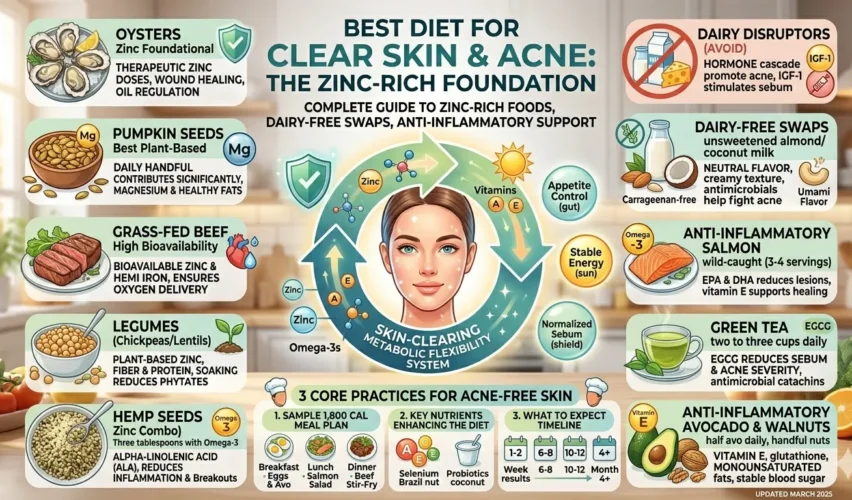
Zinc-Rich Foods: The Foundation of Best Diet for Clear Skin Acne
Zinc is the single most important mineral for clear skin. It regulates oil gland activity, reduces inflammation, supports immune function against acne bacteria, and promotes wound healing so breakouts resolve faster. People with acne consistently show lower zinc levels than people with clear skin. Incorporating zinc-rich foods forms the absolute foundation of the best diet for clear skin acne.
Oysters contain more zinc than any other food. Six medium oysters provide approximately 32 milligrams of zinc, which is 290% of the daily recommended intake. While you don’t need to eat oysters daily, including them once or twice weekly as part of the best diet for clear skin acne provides therapeutic zinc doses. Raw oysters, steamed oysters, or grilled oysters all retain zinc content effectively.
Pumpkin seeds are the best plant-based zinc source. One ounce (about a quarter cup) provides 2.2 milligrams of zinc plus healthy fats and magnesium. Roasted pumpkin seeds make an easy snack, or sprinkle them on salads and oatmeal. Eating a handful daily contributes significantly to zinc intake in the best diet for clear skin acne, especially for vegetarians who can’t eat shellfish or red meat.
Grass-fed beef provides highly bioavailable zinc along with protein and iron. A four-ounce serving of lean beef contains approximately 5 milligrams of zinc. The heme iron in beef also supports healthy skin by ensuring adequate oxygen delivery to skin cells. Including lean beef three to four times weekly as part of the best diet for clear skin acne provides substantial zinc without excessive saturated fat.
Chickpeas and lentils offer plant-based zinc with fiber and protein. One cup of cooked chickpeas provides 2.5 milligrams of zinc. While plant-based zinc is less bioavailable than animal sources due to phytates that bind minerals, eating legumes regularly still contributes meaningfully to zinc intake. Soaking or sprouting legumes before cooking reduces phytate content and improves zinc absorption.
Hemp seeds combine zinc with omega-3 fatty acids that reduce inflammation. Three tablespoons of hemp seeds provide 3 milligrams of zinc plus alpha-linolenic acid that converts to anti-inflammatory EPA and DHA. Blend hemp seeds into smoothies, sprinkle on yogurt alternatives, or add to baked goods as part of the best diet for clear skin acne.
Cashews and almonds provide moderate zinc along with healthy fats and vitamin E that supports skin healing. One ounce of cashews contains 1.6 milligrams of zinc. A handful of nuts daily as a snack contributes to overall zinc intake while providing satiety and stable blood sugar, both important for the best diet for clear skin acne.
Dark chocolate (70% cacao or higher) surprisingly contains significant zinc. One ounce provides 0.9 milligrams. While you shouldn’t rely on chocolate as your primary zinc source, a small square of high-quality dark chocolate as an occasional treat fits perfectly into the best diet for clear skin acne while satisfying sweet cravings without the inflammatory effects of milk chocolate.
The key is combining multiple zinc sources throughout the day. Aim for 15 to 30 milligrams of zinc daily from food. Animal sources provide the most bioavailable zinc, but vegetarians can meet needs through strategic combinations of seeds, nuts, legumes, and whole grains while being mindful of phytate content that reduces absorption.
Why Dairy Disrupts Clear Skin and What to Eat Instead
Dairy is one of the most common dietary triggers for acne. Multiple large-scale studies show positive correlations between dairy consumption and acne prevalence, with skim milk showing the strongest association. The reasons are hormonal and inflammatory. Understanding why dairy causes breakouts makes it easier to commit to the dairy-free swaps essential for the best diet for clear skin acne.
Dairy contains natural hormones from pregnant cows. These include estrogen, progesterone, and IGF-1. When you consume dairy, these hormones enter your bloodstream and can disrupt your own hormonal balance. IGF-1 particularly stimulates sebum production and increases androgens, both of which promote acne. Even organic dairy from grass-fed cows contains these hormones because they come from pregnancy, not from added hormones or feed.
Dairy proteins trigger insulin and IGF-1 release beyond what you’d expect from the sugar content alone. Whey and casein proteins cause insulin spikes similar to high-glycemic carbohydrates. This insulin response increases IGF-1 production in your liver, creating the same hormonal cascade that promotes acne. This is why the best diet for clear skin acne typically eliminates dairy completely, at least initially.
Many people have undiagnosed dairy sensitivities that create systemic inflammation. Even without full lactose intolerance or milk allergy, dairy can trigger low-grade inflammatory responses that show up as skin issues. Eliminating dairy for four to six weeks often reveals this connection when skin dramatically clears. This trial elimination is a cornerstone of the best diet for clear skin acne.
Dairy-Free Milk Alternatives for the Best Diet for Clear Skin Acne
Unsweetened almond milk provides a neutral-flavored dairy replacement with minimal calories and no inflammatory proteins. Choose varieties without added sugar or carrageenan, which can cause digestive inflammation in sensitive individuals. Almond milk works perfectly in smoothies, coffee, and cereal alternatives as part of the best diet for clear skin acne.
Coconut milk (from cartons, not cans) offers creamy texture without dairy. The medium-chain triglycerides in coconut milk have antimicrobial properties that may actually help fight acne-causing bacteria. Use coconut milk in coffee, smoothies, or cooking. Choose unsweetened versions to avoid blood sugar spikes.
Oat milk provides creaminess similar to dairy milk with more body than almond milk. However, oats are higher glycemic than nuts, so choose oat milk less frequently if you’re very acne-prone and sensitive to blood sugar fluctuations. When you do choose oat milk as part of the best diet for clear skin acne, select unsweetened varieties and pair with protein to minimize insulin spikes.
Hemp milk combines dairy-free liquid with omega-3 fatty acids that reduce inflammation. It has a slightly nutty flavor that works well in smoothies and cereals. Hemp milk provides anti-inflammatory benefits that actively support the best diet for clear skin acne rather than just being a neutral replacement.
Dairy-Free Cheese and Yogurt Alternatives
Cashew-based cheeses made from blended cashews, nutritional yeast, and seasonings provide creamy, cheese-like textures without dairy hormones. Make your own by blending soaked cashews with lemon juice, nutritional yeast, garlic powder, and salt. This creates a spread or sauce that satisfies cheese cravings while supporting the best diet for clear skin acne.
Coconut yogurt offers probiotic benefits without dairy. Choose varieties with live active cultures and no added sugars. The probiotics support gut health, which emerging research links to skin health through the gut-skin axis. Probiotic-rich foods like coconut yogurt enhance the skin-clearing effects of the best diet for clear skin acne.
Nutritional yeast provides a cheesy, savory flavor without any dairy. Sprinkle it on popcorn, pasta alternatives, or roasted vegetables. Nutritional yeast is also rich in B vitamins that support skin health. It’s a versatile ingredient that makes the best diet for clear skin acne more enjoyable by adding satisfying umami flavors to dishes.
The transition away from dairy feels difficult at first, but most people report that within two to three weeks, they stop craving it. The dramatic skin improvements that often follow make the sacrifice worthwhile. After eight to twelve weeks on the best diet for clear skin acne, you can test small amounts of dairy to see if your skin tolerates it. Many people find they can handle small amounts of hard cheese or butter but not milk or soft cheese.
Anti-Inflammatory Foods That Support Best Diet for Clear Skin Acne
Reducing inflammation is as important as eliminating triggers. Anti-inflammatory foods calm existing breakouts, speed healing, and prevent new acne from forming. These foods should form the bulk of your plate when following the best diet for clear skin acne.
Fatty fish like salmon, mackerel, and sardines provide omega-3 fatty acids EPA and DHA that powerfully reduce inflammation. Studies show that supplementing with omega-3s or eating fatty fish regularly reduces acne lesion counts and severity. Aim for three to four servings weekly. Wild-caught options provide better omega-3 profiles than farmed fish. These omega-3 rich foods are non-negotiable in the best diet for clear skin acne.
Leafy greens like spinach, kale, and Swiss chard contain antioxidants, vitamins A and C, and chlorophyll that support skin healing. The vitamin A in greens (in the form of beta-carotene) regulates skin cell production and prevents clogged pores. Vitamin C supports collagen production and reduces post-acne scarring. Eat leafy greens daily, aiming for at least two cups of raw greens or one cup cooked as part of the best diet for clear skin acne.
Berries, especially blueberries and strawberries, provide anthocyanins and vitamin C that reduce oxidative stress and inflammation. The antioxidants in berries protect skin cells from damage and support healing. Berries are low-glycemic, making them one of the few fruits that fits perfectly into the best diet for clear skin acne without blood sugar concerns. Eat half a cup to one cup daily.
Turmeric contains curcumin, one of the most potent anti-inflammatory compounds in food. Curcumin reduces inflammatory cytokines that worsen acne and speeds wound healing. Add turmeric to smoothies, scrambled eggs, soups, or make golden milk with coconut milk. Always combine turmeric with black pepper, which increases curcumin absorption by 2000%. Turmeric is a powerful addition to the best diet for clear skin acne.
Green tea provides EGCG, a catechin with anti-inflammatory and antimicrobial properties. Studies show green tea consumption reduces sebum production and acne severity. Drink two to three cups daily, preferably between meals rather than with meals to avoid interference with iron absorption. Green tea is one of the simplest additions to the best diet for clear skin acne.
Walnuts combine omega-3 fatty acids with vitamin E and zinc. The alpha-linolenic acid in walnuts converts partially to EPA and DHA, providing anti-inflammatory effects. A small handful daily as a snack or sprinkled on salads contributes significantly to anti-inflammatory nutrient intake in the best diet for clear skin acne.
Avocados provide monounsaturated fats, vitamin E, and glutathione that support skin healing and reduce inflammation. The healthy fats in avocado also improve absorption of fat-soluble vitamins from other foods. Half an avocado daily fits perfectly into the best diet for clear skin acne while providing satiety and stable blood sugar.
Foods to Avoid in the Best Diet for Clear Skin Acne
Knowing what not to eat is as important as knowing what to include. These foods consistently worsen acne through insulin spikes, inflammation, or hormonal disruption and should be eliminated or severely limited in the best diet for clear skin acne.
Refined sugar and high-glycemic carbohydrates spike insulin and IGF-1, directly increasing sebum production and inflammation. White bread, white rice, pastries, cookies, candy, and sweetened beverages all fall into this category. Even natural sweeteners like honey and maple syrup can spike blood sugar when consumed in large amounts. The best diet for clear skin acne keeps added sugars under 25 grams daily and emphasizes low-glycemic complex carbohydrates like quinoa, sweet potatoes, and legumes instead.
Dairy products, as discussed extensively, contain hormones that disrupt your endocrine system and trigger acne. This includes milk, cheese, yogurt, ice cream, and whey protein powder. Even small amounts can be problematic for acne-prone individuals. Eliminate dairy completely for at least six to eight weeks as part of the best diet for clear skin acne, then test small amounts to assess tolerance.
Processed vegetable oils high in omega-6 fatty acids promote inflammation when consumed in excess. Soybean oil, corn oil, and safflower oil dominate processed foods and restaurant cooking. The typical Western diet contains 15 to 20 times more omega-6 than omega-3, creating an inflammatory state. The best diet for clear skin acne emphasizes omega-3 sources and uses olive oil, avocado oil, or coconut oil for cooking instead of inflammatory vegetable oils.
Processed and fried foods combine multiple acne triggers: refined carbohydrates, inflammatory oils, and often dairy. Fast food, chips, frozen meals, and packaged snacks provide minimal nutrition while maximizing inflammatory compounds. These foods also often contain trans fats that directly worsen inflammation. Eliminate processed foods entirely from the best diet for clear skin acne and focus on whole, unprocessed ingredients.
Alcohol, particularly beer and sweet cocktails, disrupts hormone balance, impairs liver detoxification, and often contains high amounts of sugar. Alcohol also dehydrates skin and interferes with sleep, both of which worsen acne. If you drink alcohol while following the best diet for clear skin acne, limit to one to two drinks per week maximum, choosing dry wine or spirits mixed with soda water rather than sugary mixers or beer.
Whey protein supplements are concentrated dairy proteins that spike insulin dramatically. Many people break out from whey protein even if they tolerate small amounts of dairy in other forms. The best diet for clear skin acne uses plant-based protein powders from pea, hemp, or brown rice if supplementation is necessary, avoiding whey entirely.
Sample Meal Plans for Best Diet for Clear Skin Acne
Knowing which foods to eat and avoid is one thing. Turning that knowledge into actual meals you’ll prepare and enjoy is what makes the best diet for clear skin acne sustainable. Here are complete day meal plans at different calorie levels.
1,800 Calorie Meal Plan for Best Diet for Clear Skin Acne
Breakfast (7:00am): Anti-Inflammatory Power Bowl
Two whole eggs scrambled with spinach, tomatoes, and mushrooms cooked in olive oil. One slice of sprouted grain toast topped with half an avocado mashed with lemon juice and sea salt. Side of mixed berries. Green tea.
Macros: 480 calories, 22g protein, 38g carbs, 26g fat
This breakfast provides protein, healthy fats, and antioxidants that set the foundation for clear skin. The zinc from eggs, anti-inflammatory fats from avocado, and low-glycemic carbs prevent insulin spikes.
Mid-Morning Snack (10:00am): Zinc-Rich Trail Mix
Small handful of mixed raw pumpkin seeds, walnuts, and a few squares of 85% dark chocolate.
Macros: 200 calories, 6g protein, 12g carbs, 16g fat
This snack delivers zinc from pumpkin seeds, omega-3s from walnuts, and satisfies sweet cravings with anti-inflammatory dark chocolate rather than sugary options.
Lunch (1:00pm): Clear Skin Salad Bowl
Large mixed greens salad with grilled wild-caught salmon (4 ounces), cucumber, bell peppers, shredded carrots, and cherry tomatoes. Dressing made from olive oil, lemon juice, and turmeric. Half a cup of cooked quinoa mixed into the salad.
Macros: 520 calories, 32g protein, 42g carbs, 24g fat
This lunch emphasizes omega-3 rich salmon, antioxidant vegetables, and low-glycemic quinoa. The turmeric dressing adds powerful anti-inflammatory compounds directly supporting the best diet for clear skin acne.
Afternoon Snack (4:00pm): Probiotic Boost
One cup unsweetened coconut yogurt topped with two tablespoons of hemp seeds and a handful of blueberries.
Macros: 240 calories, 8g protein, 18g carbs, 16g fat
The probiotics in coconut yogurt support gut health, which influences skin health. Hemp seeds provide omega-3s and zinc, while berries add antioxidants without blood sugar spikes.
Dinner (7:00pm): Hormone-Balancing Plate
Grass-fed beef stir-fry (5 ounces lean beef) with broccoli, snap peas, bell peppers, and onions cooked in coconut oil. Served over cauliflower rice. Seasoned with ginger, garlic, and coconut aminos.
Macros: 420 calories, 38g protein, 22g carbs, 20g fat
This dinner provides high-quality protein and zinc from grass-fed beef, cruciferous vegetables that support hormone detoxification, and anti-inflammatory coconut oil. The low-glycemic profile prevents evening insulin spikes.
Evening (Optional, if hungry): Skin-Soothing Tea
Cup of green tea with a few raw cashews.
Macros: 80 calories, 2g protein, 4g carbs, 6g fat
Green tea provides EGCG for inflammation reduction, while cashews offer zinc and healthy fats.
Daily Totals: 1,940 calories, 108g protein, 136g carbs, 108g fat
This day provides substantial zinc from multiple sources, omega-3 fatty acids that reduce inflammation, low-glycemic carbohydrates that prevent insulin spikes, and zero dairy. This combination represents the best diet for clear skin acne in practical, delicious form.
Specific Nutrients That Enhance Best Diet for Clear Skin Acne
Beyond zinc and omega-3s, several other nutrients play crucial roles in clear skin. Ensuring adequate intake of these compounds maximizes results from the best diet for clear skin acne.
Vitamin A regulates skin cell production and prevents dead cells from clogging pores. There are two forms: retinol from animal sources and beta-carotene from plants. Liver is the richest source of retinol, though many people avoid it due to taste. Egg yolks, fatty fish, and grass-fed butter provide moderate retinol. Beta-carotene from sweet potatoes, carrots, and leafy greens converts to vitamin A, though conversion rates vary. Include both forms in the best diet for clear skin acne for optimal skin cell regulation.
Vitamin C supports collagen production, reduces inflammation, and helps heal acne scars. Citrus fruits, bell peppers, strawberries, and broccoli all provide abundant vitamin C. This vitamin is water-soluble and not stored in the body, so daily intake is essential. Aim for at least 75 to 90 milligrams daily from food sources as part of the best diet for clear skin acne.
Vitamin E is a fat-soluble antioxidant that protects skin cells from oxidative damage and supports healing. Almonds, sunflower seeds, avocados, and spinach provide vitamin E. This vitamin works synergistically with vitamin C and selenium to reduce inflammation. Including vitamin E-rich foods daily enhances the anti-inflammatory effects of the best diet for clear skin acne.
Selenium works with vitamin E to reduce oxidative stress and inflammation. Brazil nuts are exceptionally high in selenium, with just two nuts providing more than the daily requirement. Tuna, sardines, and eggs also provide selenium. Don’t overdo Brazil nuts as excessive selenium can be toxic. Two to three Brazil nuts twice weekly provides adequate selenium as part of the best diet for clear skin acne.
Probiotics support gut health, which increasingly appears connected to skin health through the gut-skin axis. Fermented foods like sauerkraut, kimchi, and coconut yogurt provide beneficial bacteria. A healthy gut microbiome reduces systemic inflammation that can manifest as acne. Including probiotic-rich foods several times weekly supports the best diet for clear skin acne through improved gut function.
High-Protein Diet for Muscle Gain
Hydration and Clear Skin
Water intake rarely gets mentioned in discussions about the best diet for clear skin acne, but hydration profoundly impacts skin health. Dehydrated skin produces more oil to compensate for lack of moisture, potentially clogging pores. Adequate water intake supports toxin elimination through kidneys rather than through skin, reducing the burden on pores.
Aim for at least eight glasses of water daily, more if you exercise intensely or live in hot climates. Adding lemon to water provides vitamin C and may support liver detoxification. Herbal teas like chamomile and rooibos count toward hydration while providing additional antioxidants. Green tea provides hydration plus EGCG for inflammation reduction, making it doubly beneficial for the best diet for clear skin acne.
Avoid drinking large amounts of water with meals, as this can dilute digestive enzymes and impair nutrient absorption. Instead, drink water between meals. First thing in the morning, drink 16 ounces of water to rehydrate after the overnight fast. This simple habit supports overall hydration status and helps flush out metabolic waste products.
Timeline: What to Expect on Best Diet for Clear Skin Acne
Understanding the timeline helps maintain realistic expectations and prevents premature abandonment of dietary changes. Skin improvements follow a predictable pattern when you consistently follow the best diet for clear skin acne.
Week 1 to 2: Initial changes may include temporary worsening as your body adjusts. Some people experience a brief “purging” period where existing clogged pores surface as active breakouts. This is normal and temporary. You may also notice improved digestion and more stable energy as blood sugar stabilizes.
Week 3 to 4: Inflammation begins reducing noticeably. Existing breakouts heal faster than before. New breakouts may still occur but are less severe and resolve more quickly. Skin texture starts improving as oil production normalizes.
Week 6 to 8: Significant improvements become obvious. Breakout frequency decreases substantially. Skin tone becomes more even as post-inflammatory hyperpigmentation begins fading. Friends and family start commenting that your skin looks better. This is when the best diet for clear skin acne proves its effectiveness.
Week 10 to 12: Dramatic transformation for most people. Persistent acne that resisted topical treatments clears significantly or completely. Skin has a natural glow from reduced inflammation and improved nutrition. Confidence increases as you can go makeup-free without self-consciousness.
Month 4 and Beyond: Maintenance becomes second nature. You’ve identified your personal trigger foods and know how to navigate social situations while maintaining clear skin. Occasional breakouts still happen around hormonal fluctuations or stress, but they’re mild and short-lived compared to before starting the best diet for clear skin acne.
Patience is crucial. Your skin has a natural 28-day turnover cycle, meaning changes in cell production today won’t show up visibly for nearly a month. Stick with the best diet for clear skin acne for at least 12 weeks before evaluating results. Most people see significant improvements by week 8, but full transformation requires three to four months of consistency.
Common Mistakes People Make With Best Diet for Clear Skin Acne
Mistake One: Not Eliminating Dairy Completely
Some people cut back on dairy but still have milk in coffee or cheese on salads, then wonder why their skin isn’t clearing. The hormones in dairy are potent enough that even small amounts can trigger breakouts in sensitive individuals. The best diet for clear skin acne requires complete dairy elimination for at least six to eight weeks to see if dairy is your trigger. You can’t test dairy’s effects with half measures.
Mistake Two: Replacing Dairy With High-Sugar Alternatives
Switching from dairy milk to sweetened almond milk or coconut milk with added sugar defeats the purpose. The blood sugar spikes from added sugar trigger insulin and IGF-1 just like dairy does. Always choose unsweetened non-dairy alternatives as part of the best diet for clear skin acne.
Mistake Three: Not Addressing Gut Health
Focusing only on food triggers while ignoring gut health misses a crucial piece. Poor gut health creates systemic inflammation that shows up in skin. The best diet for clear skin acne includes probiotic-rich foods and fiber to support healthy gut bacteria. Consider adding fermented foods even if they’re not your favorite initially.
Mistake Four: Giving Up Too Soon
Expecting clear skin in two weeks leads to disappointment and abandonment of dietary changes just as they’re starting to work. Skin improvements take time because your skin has a turnover cycle. Commit to the best diet for clear skin acne for a minimum of 12 weeks before evaluating whether it’s working. Most people see significant results by week 8 if they’re consistent.
Mistake Five: Ignoring Stress and Sleep
Diet is crucial, but stress and poor sleep elevate cortisol, which worsens acne through increased inflammation and oil production. The best diet for clear skin acne works optimally when paired with stress management and seven to nine hours of quality sleep nightly. Don’t ignore these factors while perfecting your nutrition.
Supplements That Support Best Diet for Clear Skin Acne
While food should provide most nutrients, certain supplements have strong evidence for improving acne when combined with dietary changes.
Zinc supplements at 30 milligrams daily can help people who struggle to get adequate zinc from food. Choose zinc picolinate or zinc glycinate, which absorb better than zinc oxide. Don’t exceed 40 milligrams daily as excess zinc interferes with copper absorption. Zinc supplementation enhances results from the best diet for clear skin acne, particularly for people who don’t eat animal products.
Omega-3 fish oil providing 1 to 2 grams of combined EPA and DHA daily reduces inflammation systemically. This is especially helpful for people who don’t eat fatty fish regularly. Choose high-quality, third-party tested fish oil to avoid contaminants. Omega-3 supplementation amplifies the anti-inflammatory effects of the best diet for clear skin acne.
Probiotics with multiple strains and at least 10 billion CFU daily support gut health. Look for refrigerated options with Lactobacillus and Bifidobacterium strains. While fermented foods provide probiotics, supplementation ensures therapeutic doses. Probiotics enhance the skin-clearing effects of the best diet for clear skin acne through improved gut function.
Vitamin D deficiency is common and linked to increased acne severity. If you live in northern latitudes or don’t get regular sun exposure, consider supplementing with 1000 to 2000 IU daily, especially in winter months. Adequate vitamin D supports immune function and reduces inflammation, both beneficial for clear skin.
These supplements enhance the best diet for clear skin acne but cannot replace it. Fix the dietary foundation first, then add targeted supplementation for additional benefits.
Final Thoughts on Following Best Diet for Clear Skin Acne
You now understand the complete nutritional approach to clear skin. You know that the best diet for clear skin acne eliminates dairy and high-glycemic foods that spike insulin and IGF-1, emphasizes zinc-rich foods that regulate sebum production, includes omega-3 fatty acids that reduce inflammation, and provides antioxidants that support healing. You have specific meal plans and understand the timeline for seeing results.
Clear skin starts from within. No amount of expensive topical products can overcome the inflammatory effects of a poor diet. But when you align your nutrition with your skin’s biological needs through the best diet for clear skin acne, the results are often dramatic. Painful cystic acne resolves. Persistent whiteheads disappear. Inflammation calms. Your skin develops a natural, healthy glow that no makeup can replicate.
Start implementing these strategies this week. Eliminate dairy completely for eight weeks. Add zinc-rich foods to every day. Include fatty fish three times weekly. Choose low-glycemic carbohydrates. Track your skin changes weekly with photos. Most people see significant improvements by week 8 and dramatic transformation by week 12. Once you experience clear skin from the best diet for clear skin acne, maintaining these habits becomes effortless because the results speak for themselves. Your skin will thank you.