
If you’ve tried cutting carbs completely and felt exhausted, irritable, or stuck at a weight loss plateau, carb cycling might be the strategy you’ve been looking for. A well-designed carb cycling meal plan for women helps you lose fat while keeping your energy high, preserving muscle, and supporting hormone balance. Unlike extreme low-carb diets that leave you feeling deprived, carb cycling works with your body’s natural rhythms to optimize fat burning on some days and fuel intense workouts on others.
This guide breaks down exactly how carb cycling works for women, why it’s effective for fat loss, and provides practical meal plans you can start using this week. You’ll learn how to pair high-carb and low-carb days with your training schedule, what foods to eat, and how to customize the approach based on your lifestyle and goals.
What Is Carb Cycling and How Does It Work?
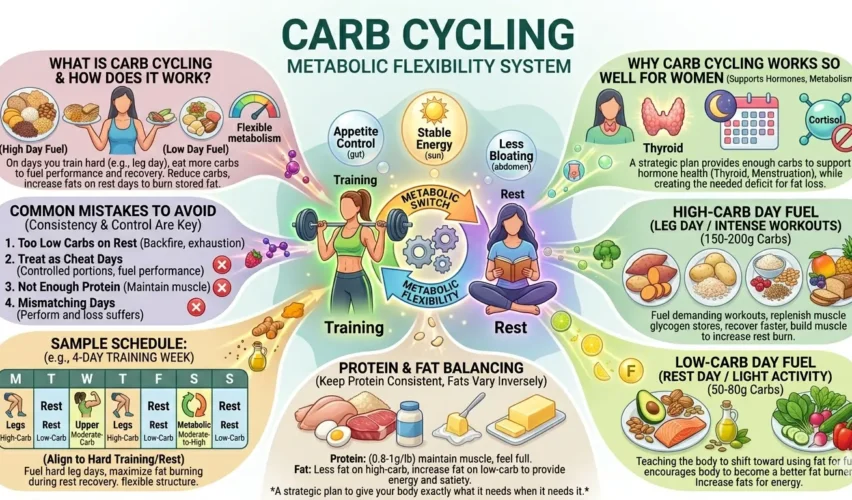
Carb cycling is a nutrition strategy where you alternate between eating higher amounts of carbohydrates on some days and lower amounts on others. The idea is simple but powerful. On days when you train hard, especially with strength training or high-intensity workouts, you eat more carbs to fuel performance and recovery. On rest days or lighter activity days, you reduce carbs and increase healthy fats to encourage your body to burn stored fat for energy.
This approach keeps your metabolism flexible and prevents the metabolic slowdown that often happens with constant low-carb dieting. For women specifically, carb cycling can be particularly beneficial because it supports thyroid function, menstrual health, and energy levels better than extreme restriction. When you create a carb cycling meal plan for women that matches your activity level, you give your body exactly what it needs when it needs it.
The cycling pattern typically looks like this. You might eat around 150 to 200 grams of carbs on high days when you’re doing leg workouts or other demanding training sessions. On low-carb days, you’d drop down to about 50 to 80 grams, focusing instead on protein and healthy fats. Moderate days fall somewhere in between, usually around 100 to 130 grams of carbs. The exact numbers depend on your body size, activity level, and goals, but this framework gives you a starting point.
Why Carb Cycling Works So Well for Women
Women’s bodies respond differently to carbohydrate restriction than men’s bodies do. Going too low-carb for too long can disrupt thyroid hormones, increase cortisol, affect menstrual cycles, and make fat loss harder despite your best efforts. A strategic carb cycling meal plan for women addresses these challenges by providing enough carbs to support hormonal health while still creating the calorie deficit needed for fat loss.
When you eat carbs strategically around your workouts, you improve insulin sensitivity, which means your body processes carbs more efficiently instead of storing them as fat. High-carb days replenish glycogen stores in your muscles, helping you perform better during training and recover faster afterward. This matters because building and maintaining muscle is crucial for long-term fat loss. The more muscle you have, the more calories you burn at rest.
Low-carb days teach your body to become a better fat burner. When carbs are limited and glycogen stores are lower, your body shifts toward using fat for fuel. This metabolic flexibility is valuable because it means you’re not constantly dependent on carbs for energy. You’ll notice better appetite control, more stable energy throughout the day, and less bloating on low-carb days.
Another benefit is psychological. Knowing you have high-carb days built into your week makes the plan feel sustainable. You’re not eliminating your favorite healthy carbs forever. You’re simply timing them strategically. This prevents the feelings of deprivation that often lead to binge eating or falling off track completely.
Building Your Carb Cycling Meal Plan for Women
Creating an effective carb cycling meal plan for women starts with understanding your weekly schedule and workout routine. The most common approach pairs high-carb days with your hardest training sessions, typically lower body workouts like squats, deadlifts, and leg-focused exercises. These movements use large muscle groups and deplete glycogen stores significantly, so they benefit most from carb intake.
Let’s say you train four days per week with two leg days, one upper body day, and one full-body or metabolic conditioning day. Your week might look like this. Monday is leg day, so it’s a high-carb day. Tuesday is rest or light activity, so it’s a low-carb day. Wednesday is upper body training, which could be a moderate-carb day. Thursday is another leg day, making it high-carb again. Friday is rest or yoga, so low-carb. Saturday is your metabolic or full-body workout, so moderate to high-carb depending on intensity. Sunday is rest and low-carb.
This structure ensures you’re fueling performance when it matters most while maximizing fat burning during recovery periods. The key is consistency and paying attention to how your body responds. Some women feel better with three high-carb days per week, while others do best with just two. There’s room to adjust based on your energy levels, recovery, and results.
When planning your carb cycling meal plan for women, focus on whole food sources. High-carb days should include nutrient-dense carbohydrates like sweet potatoes, white potatoes, rice, oats, quinoa, fruits, and whole grain bread if tolerated. These foods provide energy along with vitamins, minerals, and fiber. Low-carb days emphasize lean proteins, healthy fats from sources like avocado, nuts, seeds, olive oil, and fatty fish, plus plenty of non-starchy vegetables.
Protein intake stays relatively consistent across all days, typically around 0.8 to 1 gram per pound of body weight. This supports muscle maintenance and keeps you feeling full. Fat intake varies inversely with carbs. On high-carb days, you’ll eat less fat to keep calories controlled. On low-carb days, you increase fat to provide energy and satiety since carbs are reduced.
High-Carb Day Meal Plan for Women
High-carb days are designed to fuel demanding workouts and support recovery. These are the days when you’ll feel strongest in the gym and have the most energy. A typical high-carb day for a woman weighing around 140 to 160 pounds might include approximately 1500 to 1700 calories with 150 to 180 grams of carbs, 120 to 140 grams of protein, and 40 to 50 grams of fat.
For breakfast on a high-carb day, you might start with oatmeal made with half a cup of dry oats cooked in water or unsweetened almond milk, topped with half a sliced banana, a tablespoon of almond butter, and a sprinkle of cinnamon. Alongside that, have three scrambled egg whites with one whole egg cooked with a small amount of coconut oil spray, plus a handful of berries. This meal provides quality carbs for energy, protein to support muscle, and enough fat to keep you satisfied.
Mid-morning if you need a snack, keep it light. A small apple with a serving of low-fat Greek yogurt works well. The carbs from the fruit give you sustained energy without overdoing it before lunch.
Lunch on a high-carb day should be substantial and balanced. Try grilled chicken breast seasoned with herbs and lemon, served over one cup of cooked brown rice or quinoa, with a large mixed green salad dressed with balsamic vinegar and a teaspoon of olive oil. Add roasted vegetables like bell peppers, zucchini, and cherry tomatoes. This combination delivers lean protein, complex carbs, fiber, and micronutrients that support overall health and performance.
For an afternoon snack before your workout, have a medium-sized sweet potato baked and topped with a small amount of cinnamon, paired with a small handful of almonds. This gives you easily digestible carbs for your training session while the almonds provide some healthy fats and additional protein.
Post-workout is when your body is most primed to use carbohydrates effectively. A protein shake made with one scoop of whey or plant-based protein powder, half a cup of frozen mango or pineapple, half a banana, and water or unsweetened almond milk refuels your muscles quickly. The combination of protein and fast-digesting carbs helps kickstart recovery.
Dinner continues the high-carb cycling meal plan for women theme but remains clean and nutrient-dense. Baked salmon or lean beef served with roasted white or sweet potato wedges seasoned with paprika and garlic, alongside steamed broccoli or green beans drizzled with a small amount of olive oil, makes for a satisfying evening meal. The quality protein supports overnight muscle repair while the carbs replenish what you used during training.
If you’re hungry later in the evening, a small bowl of berries or a rice cake with a thin spread of almond butter keeps you on track without adding excessive calories. The goal on high-carb days isn’t to overeat but to provide your body with the fuel it needs to perform and recover optimally.
Low-Carb Day Meal Plan for Women
Low-carb days shift your focus toward fat burning and are typically scheduled on rest days or days with only light activity like walking or gentle yoga. These days help create the calorie deficit needed for fat loss while keeping protein high to preserve muscle. A low-carb day might contain around 1300 to 1500 calories with 50 to 80 grams of carbs, 120 to 140 grams of protein, and 70 to 90 grams of healthy fats.
Breakfast on a low-carb day could be a vegetable omelet made with two whole eggs and two egg whites, filled with spinach, mushrooms, tomatoes, and onions, cooked in a teaspoon of olive oil or avocado oil. Serve this with half an avocado on the side and you have a filling, nutrient-packed meal that keeps blood sugar stable and provides lasting energy without relying on carbs.
A mid-morning snack might be a handful of raw almonds or walnuts paired with some celery sticks. The healthy fats and fiber keep hunger at bay while supporting your body’s shift toward fat metabolism.
For lunch, focus on a large salad base with plenty of variety. Start with mixed greens, add grilled chicken thighs or turkey, then pile on non-starchy vegetables like cucumbers, radishes, bell peppers, and shredded cabbage. Top it with sliced avocado, a few olives, and dress it generously with olive oil and apple cider vinegar or lemon juice. The combination of protein, healthy fats, and fiber-rich vegetables keeps you full for hours without needing carbs.
An afternoon snack could be Greek yogurt, the full-fat version with no added sugar, mixed with a tablespoon of chia seeds and a few crushed walnuts. This provides probiotics for gut health, protein, and omega-3 fatty acids.
Dinner on a low-carb day emphasizes quality protein and vegetables. Grilled steak or baked cod served with a generous portion of roasted Brussels sprouts, asparagus, or cauliflower cooked with garlic and olive oil makes a delicious, satisfying meal. Add a side salad with mixed greens, cherry tomatoes, and a simple olive oil dressing to increase volume without adding many calories.
If you want something in the evening, a small serving of cottage cheese with cucumber slices or a few macadamia nuts provides protein and healthy fats without sabotaging your low-carb goals. The key on these days is feeling satisfied from fats and protein rather than relying on carbs for fullness.
Moderate-Carb Day Meal Plan for Women
Moderate-carb days work well for upper body workouts, moderate-intensity cardio, or active recovery days. These days provide enough carbs to support activity without going as high as leg day. You’re looking at roughly 100 to 130 grams of carbs, 120 to 140 grams of protein, and 50 to 65 grams of fat for around 1400 to 1600 calories.
Breakfast might include two scrambled whole eggs with one egg white, served alongside one slice of whole grain toast topped with mashed avocado and tomato slices. Add a small orange or half a grapefruit on the side for a balanced start that includes quality carbs, protein, and healthy fats.
A mid-morning snack of rice cakes topped with a thin layer of natural almond butter and sliced strawberries gives you a moderate dose of carbs with some protein and fat to hold you over until lunch.
Lunch could be a turkey and vegetable stir-fry made with lean ground turkey, bell peppers, snap peas, carrots, and onions, served over half a cup of cooked jasmine rice or cauliflower rice mixed with regular rice. Season with ginger, garlic, and a splash of low-sodium soy sauce for flavor without excess calories.
Before your afternoon workout, have a banana with a small handful of almonds. This gives you accessible energy without overloading on carbs.
Post-workout, a protein shake with one scoop of protein powder, a small handful of berries, and unsweetened almond milk helps with recovery while keeping carbs moderate.
Dinner on a moderate day might feature grilled chicken breast or shrimp served with roasted butternut squash and a large portion of sautéed kale or spinach with garlic and a drizzle of olive oil. The squash provides moderate carbs while the greens add volume, fiber, and nutrients.
An evening snack of Greek yogurt with a few berries rounds out your day nicely, providing protein and a touch of natural sweetness without going overboard on carbs.
Pairing Carb Cycling with Your Training Schedule
The magic of a carb cycling meal plan for women really shines when you align it properly with your workouts. Leg days demand the most energy because exercises like squats, lunges, deadlifts, and leg presses recruit large muscle groups and burn significant glycogen. Scheduling these as high-carb days ensures you have the fuel to train hard and recover effectively.
Upper body workouts typically don’t deplete glycogen as dramatically, so moderate-carb days work perfectly. You still get enough carbs to support performance, but you’re not overdoing it when your body doesn’t need as much. Rest days naturally become low-carb days because your energy demands are lower and you want to maximize fat burning during recovery.
If you do cardio or metabolic conditioning, consider the intensity and duration. A 20-minute HIIT session might fit well on a moderate-carb day, while a longer, more intense session could justify a high-carb day. Listen to your body and adjust as needed. The framework is flexible, not rigid.
Timing your carbs around workouts also matters. Having a portion of your daily carbs one to two hours before training gives you accessible energy. Including carbs in your post-workout meal or shake helps replenish glycogen and supports recovery. The rest of your carbs can be spread throughout the day, especially at breakfast to start your metabolism and provide energy for your morning.
Tips for Success with Carb Cycling
Starting a carb cycling meal plan for women requires some planning, but once you get into a rhythm, it becomes second nature. Meal prep on the weekend makes everything easier. Cook proteins in bulk like chicken breast, ground turkey, and hard-boiled eggs. Prepare several servings of sweet potatoes, rice, and quinoa. Chop vegetables so they’re ready to roast or add to salads. Having components ready means you can quickly assemble meals throughout the week without stress.
Track your intake, at least initially, using an app to ensure you’re hitting your carb, protein, and fat targets for each type of day. After a few weeks, you’ll develop an intuitive sense of portion sizes and won’t need to track as carefully. But in the beginning, tracking helps you learn what a high-carb versus low-carb day actually looks like on your plate.
Stay hydrated, especially on low-carb days when your body releases water weight. Drinking plenty of water supports metabolism, energy levels, and helps control hunger. Aim for at least eight glasses daily, more if you’re training hard or live in a hot climate.
Give your body time to adapt. The first week or two of carb cycling might feel strange as your metabolism adjusts. You might feel lower energy on the first few low-carb days or extra hungry on high-carb days as your body learns this new pattern. Stick with it. Most women report feeling amazing after two to three weeks once their bodies adapt to using fat for fuel more efficiently.
Adjust based on your menstrual cycle if needed. Some women find they need slightly more carbs during the luteal phase or right before menstruation when energy demands increase. There’s no one-size-fits-all approach. The beauty of a carb cycling meal plan for women is that it’s customizable to your unique physiology and lifestyle.
Common Mistakes to Avoid
One common mistake is making low-carb days too extreme. Dropping carbs to nearly zero isn’t necessary and can backfire, leaving you exhausted and more likely to binge later. Keep carbs at least at 50 to 80 grams from vegetables and small amounts of fruit to maintain energy and adherence.
Another error is not eating enough protein. Protein should remain consistent and adequate across all days to support muscle maintenance and recovery. Skimping on protein undermines your results because muscle is metabolically active tissue that helps you burn more calories even at rest.
Some women overeat on high-carb days, treating them like cheat days. High-carb doesn’t mean high-calorie or eating junk. Stick to whole food sources and controlled portions. The goal is to fuel performance, not undo your progress with excessive calories.
Failing to align carb days with training is another pitfall. If you schedule a high-carb day on a rest day and a low-carb day on leg day, you’re working against yourself. Your performance will suffer, and you won’t see the fat loss benefits. Match your nutrition to your activity for the best results.
Final Thoughts
A well-structured carb cycling meal plan for women offers a sustainable, flexible approach to fat loss that works with your body instead of against it. By strategically varying your carbohydrate intake based on your training schedule, you optimize energy, preserve muscle, support hormonal balance, and maximize fat burning. You’re not trapped in endless restriction or confused about what to eat. You have a clear plan that adapts to your weekly routine and delivers real results, carb cycling meal plan for women
Whether you’re new to structured nutrition or you’ve tried other approaches without success, carb cycling provides the balance many women need to finally break through plateaus and achieve the lean, strong physique they want. Start with the meal plan templates provided, pair your high-carb days with challenging leg workouts, and give your body the time it needs to adapt. Track your progress, adjust as necessary, and stay consistent. The results will follow, and you’ll discover a way of eating that actually feels sustainable for the long term.
6 Natural Ingredients & Recipes