Your body doesn’t respond to carbohydrates the way it used to. You eat the same breakfast you’ve always eaten, but now your energy crashes two hours later. You feel hungry again by mid-morning despite eating plenty at breakfast. Your weight creeps up even though you’re not eating more calories than before. These aren’t signs of aging or bad luck. They’re symptoms of declining insulin sensitivity, and the right diet to improve insulin sensitivity can reverse every single one of these problems.
Insulin sensitivity determines how effectively your cells respond to insulin’s signal to absorb glucose from your bloodstream. When insulin sensitivity is high, your body needs only small amounts of insulin to manage blood sugar, and your cells efficiently use glucose for energy instead of storing it as fat. When insulin sensitivity declines, your pancreas pumps out more and more insulin trying to force glucose into resistant cells, leading to chronically elevated insulin levels that promote fat storage, inflammation, and eventually type 2 diabetes.
The good news is that a strategic diet to improve insulin sensitivity works faster than most people realize. Within two to three weeks of implementing low-glycemic meal strategies and smart nutrient timing, you’ll notice stable energy throughout the day, reduced cravings, easier fat loss, and better workout performance. I’m breaking down the complete diet to improve insulin sensitivity, including which low-GI foods work best, how to time your carbohydrates around activity for maximum benefit, and specific meal combinations that keep blood sugar stable from morning until night.
Why a Diet to Improve Insulin Sensitivity Matters More Than Calories
Most diet advice focuses exclusively on calories in versus calories out. Eat less, move more, lose weight. But this ignores the hormonal reality of how your body actually processes food. Two meals with identical calories can have completely different effects on your insulin levels, fat storage, and energy depending on their glycemic impact and nutrient timing.
When you eat high-glycemic foods that spike blood sugar rapidly, your pancreas releases a large insulin surge to bring glucose levels back down. This works in the short term, but chronically high insulin has serious consequences. High insulin levels block fat burning completely. Your body cannot access stored fat for energy when insulin is elevated. High insulin also promotes fat storage, particularly around your midsection where insulin-resistant fat cells are most concentrated. Over time, your cells become resistant to insulin’s signal, requiring even more insulin to achieve the same effect. This vicious cycle leads to weight gain, metabolic syndrome, and type 2 diabetes.
A diet to improve insulin sensitivity breaks this cycle by choosing foods and timing strategies that minimize insulin spikes. Low-glycemic foods release glucose slowly into your bloodstream, requiring only modest insulin responses. Strategic carbohydrate timing places your carbohydrate intake when your body is most insulin-sensitive, like after exercise, while keeping carbs lower during sedentary periods. These strategies allow your cells to regain their sensitivity to insulin’s signal, reducing the amount of insulin your body needs to produce and unlocking your ability to burn stored fat for energy.
Research from the Journal of Clinical Endocrinology & Metabolism shows that implementing a diet to improve insulin sensitivity can reduce fasting insulin levels by 30 to 50% within four to six weeks, even without significant weight loss. The improved insulin sensitivity comes first, then fat loss follows naturally as your body regains the ability to access stored energy. This is why a diet to improve insulin sensitivity produces better long-term results than simple calorie restriction.
The Foundation of Any Diet to Improve Insulin Sensitivity: Low-Glycemic Foods
The glycemic index measures how quickly a food raises blood sugar compared to pure glucose. High-GI foods spike blood sugar rapidly, demanding large insulin responses. Low-GI foods release glucose slowly, requiring only modest insulin. Building your diet to improve insulin sensitivity around low-GI foods is the single most important nutritional strategy for reversing insulin resistance.
Non-starchy vegetables form the foundation of every diet to improve insulin sensitivity. Leafy greens like spinach, kale, arugula, and lettuce have essentially zero glycemic impact. Cruciferous vegetables like broccoli, cauliflower, Brussels sprouts, and cabbage are equally low-GI while providing fiber that further slows glucose absorption. Bell peppers, zucchini, cucumbers, tomatoes, and asparagus all qualify as low-GI vegetables that should fill half your plate at every meal.
These vegetables provide volume and nutrients without spiking insulin. You can eat large quantities, feel satisfied, and maintain stable blood sugar for hours. This is the opposite of high-GI foods like white bread or sugary snacks that provide temporary satisfaction followed by crashes and cravings. Any effective diet to improve insulin sensitivity includes abundant non-starchy vegetables at every meal.
Legumes and beans are underrated low-GI carbohydrate sources. Lentils, chickpeas, black beans, and kidney beans all have glycemic index scores between 20 and 40, compared to white rice at 73 or white bread at 75. The fiber and protein in legumes slow glucose absorption dramatically. Half a cup of cooked lentils provides complex carbohydrates that release energy steadily for three to four hours without spiking insulin. This makes legumes essential components of a diet to improve insulin sensitivity, especially for people who respond well to higher carbohydrate intake.
Whole grains in moderation can fit into a diet to improve insulin sensitivity when chosen carefully. Steel-cut oats have a GI of 55 compared to instant oats at 83. Quinoa scores around 53, while brown rice is approximately 68. The key is portion control and proper pairing. A half-cup serving of steel-cut oats eaten with protein and healthy fats has minimal insulin impact. Two cups of instant oatmeal with sugar spikes insulin dramatically. The difference isn’t the grain itself but the processing, portion size, and what you eat with it.
Berries are the best fruit choice for any diet to improve insulin sensitivity. Strawberries, blueberries, raspberries, and blackberries have low glycemic loads due to their high fiber content and relatively low sugar concentration. They provide antioxidants, vitamins, and natural sweetness without the insulin spike from higher-sugar fruits like bananas, grapes, or dried fruit. A cup of mixed berries with Greek yogurt makes an excellent low-GI snack or breakfast component.
Nuts and seeds provide healthy fats, protein, and fiber with virtually no glycemic impact. Almonds, walnuts, pecans, pumpkin seeds, and chia seeds all support a diet to improve insulin sensitivity by providing satisfying calories that don’t raise blood sugar. The combination of fat and protein in nuts slows stomach emptying, further stabilizing blood sugar when eaten with other foods. A handful of almonds eaten with an apple dramatically reduces the apple’s glycemic impact compared to eating the apple alone.
Protein Strategy for a Diet to Improve Insulin Sensitivity
Protein is the secret weapon in any diet to improve insulin sensitivity. Protein has minimal direct impact on blood sugar but dramatically improves insulin sensitivity through multiple mechanisms. Protein slows gastric emptying, meaning food leaves your stomach more slowly, which moderates the rate at which glucose enters your bloodstream. Protein stimulates the release of hormones that improve insulin signaling in muscle cells. Most importantly, adequate protein preserves muscle mass, and muscle tissue is the most insulin-sensitive tissue in your body.
Lean proteins should anchor every meal in a diet to improve insulin sensitivity. Chicken breast, turkey, white fish like cod or tilapia, and egg whites provide pure protein with minimal fat. These proteins pair perfectly with low-GI carbohydrates and vegetables to create balanced meals that maintain stable blood sugar for hours. Aim for 25 to 35 grams of protein per meal if you weigh 130 to 180 pounds, adjusting up or down based on your body size.
Fatty fish like salmon, mackerel, and sardines provide protein plus omega-3 fatty acids that directly improve insulin sensitivity. Research shows that omega-3s enhance insulin receptor function in cell membranes, making cells more responsive to insulin’s signal. Eating fatty fish three to four times per week is one of the most powerful additions to a diet to improve insulin sensitivity. A four-ounce serving of wild-caught salmon provides 25 grams of protein plus therapeutic doses of EPA and DHA omega-3s.
Eggs, especially whole eggs, are nutrient powerhouses for a diet to improve insulin sensitivity. The combination of high-quality protein, healthy fats, and nutrients like choline supports metabolic health. Studies show that eating eggs for breakfast improves blood sugar control for the entire day compared to cereal-based breakfasts. Three whole eggs provide 18 grams of protein and create sustained satiety that prevents mid-morning blood sugar crashes.
Greek yogurt delivers concentrated protein with probiotics that support gut health. Emerging research links gut microbiome health to insulin sensitivity, making fermented foods like Greek yogurt valuable in a diet to improve insulin sensitivity. Choose plain, unsweetened varieties to avoid added sugars. One cup provides 15 to 20 grams of protein and pairs beautifully with berries and nuts for a complete low-GI meal.
The key principle is including protein with every meal and snack. Protein alone has minimal insulin impact, but more importantly, protein eaten with carbohydrates dramatically reduces the insulin response to those carbohydrates. An apple eaten alone might score 38 on the glycemic index. That same apple eaten with two tablespoons of almond butter has an effective glycemic load of perhaps 20 due to the fat and protein slowing glucose absorption. This synergy makes protein essential to any diet to improve insulin sensitivity.
Healthy Fats That Support a Diet to Improve Insulin Sensitivity
Dietary fat was vilified for decades, but research now shows that the right fats are crucial for a diet to improve insulin sensitivity. Healthy fats slow gastric emptying, reduce the glycemic impact of meals, provide sustained energy, and supply essential fatty acids that improve insulin receptor function.
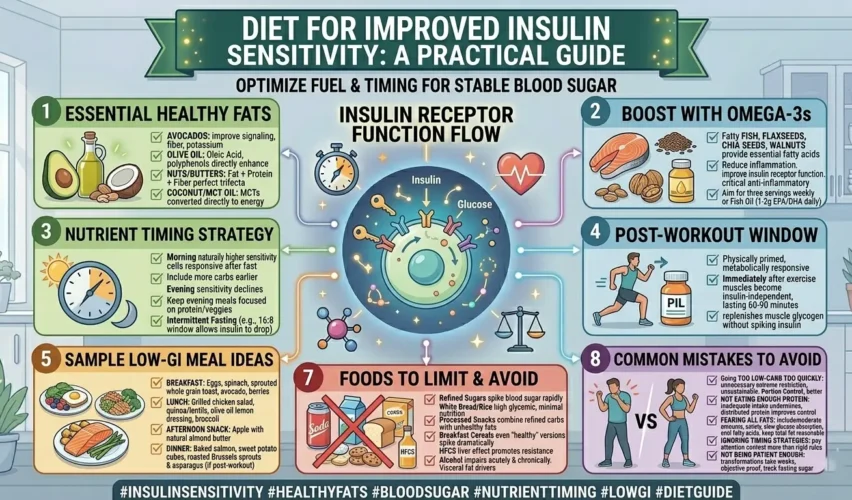
Avocados are perfect for a diet to improve insulin sensitivity. They provide monounsaturated fats that improve insulin signaling, fiber that slows glucose absorption, and potassium that supports cellular function. Half an avocado added to a meal reduces the glycemic response by 20 to 30% compared to eating that meal without fat. The creamy texture also increases satiety, preventing overeating and blood sugar fluctuations from excess calories.
Olive oil, especially extra-virgin, contains oleic acid and polyphenols that directly enhance insulin sensitivity. Studies show that Mediterranean-style diets high in olive oil improve insulin function even without significant weight loss. Use olive oil as your primary cooking fat and salad dressing. Two tablespoons per day provides enough monounsaturated fats to support metabolic health while adding minimal calories.
Nuts and nut butters combine healthy fats with protein and fiber, creating the perfect trifecta for blood sugar control. Almonds, walnuts, and macadamia nuts have all been shown to improve insulin sensitivity when consumed regularly. Natural almond butter or peanut butter (without added sugar) makes an excellent pairing with low-GI fruits or whole grain crackers. The fat content transforms a potentially moderate-GI snack into a low-GI option.
Coconut oil and MCT oil provide medium-chain triglycerides that are metabolized differently than other fats. MCTs are converted directly to energy rather than stored, and they may improve insulin sensitivity through effects on cellular energy production. One to two tablespoons of coconut oil used for cooking or added to coffee provides these benefits without excessive calorie intake.
Omega-3 rich foods like fatty fish, flaxseeds, chia seeds, and walnuts provide essential fatty acids that reduce inflammation and improve insulin receptor function. Chronic inflammation is a major driver of insulin resistance, so the anti-inflammatory effects of omega-3s make them critical for any diet to improve insulin sensitivity. Aim for at least three servings of omega-3 rich foods weekly, or consider a high-quality fish oil supplement providing 1 to 2 grams of combined EPA and DHA daily.
The mistake people make is either avoiding all fats or consuming too much of the wrong fats. Trans fats from processed foods and excessive omega-6 fats from vegetable oils promote insulin resistance. The healthy fats listed above improve insulin sensitivity. Include moderate amounts of healthy fats with every meal as part of your diet to improve insulin sensitivity, but keep total fat intake reasonable since fats are calorie-dense.
Nutrient Timing: When You Eat Matters for a Diet to Improve Insulin Sensitivity
The same foods have different effects on insulin sensitivity depending on when you eat them. Your body’s insulin sensitivity fluctuates throughout the day and responds dramatically to physical activity. Strategic timing turns a good diet to improve insulin sensitivity into an exceptional one.
Morning insulin sensitivity is naturally higher for most people. Your cells are more responsive to insulin after the overnight fast, making breakfast an ideal time for higher-carbohydrate meals if you tolerate them. A breakfast containing oatmeal, fruit, or whole grain toast has less insulin impact at 7am than the identical meal eaten at 7pm. This natural variation means a diet to improve insulin sensitivity can include more carbohydrates earlier in the day while tapering them in the evening.
Post-exercise is the single most insulin-sensitive time. Immediately after resistance training or high-intensity exercise, your muscles become insulin-independent, meaning they can absorb glucose without requiring insulin at all. This window lasts approximately 60 to 90 minutes after training. Eating carbohydrates during this window replenishes muscle glycogen without spiking insulin or promoting fat storage. This is when even higher-GI foods like white rice or potatoes can fit into a diet to improve insulin sensitivity because your muscles are metabolically primed to use that glucose immediately.
A practical application: if you train at 5pm, eat your largest carbohydrate meal immediately after training. This might include white rice, sweet potatoes, or even white bread if that’s what you prefer. Your muscles absorb these carbs directly without requiring high insulin levels. Then eat lower-carb meals for the rest of the evening. This timing strategy allows you to enjoy carbohydrates while maintaining excellent insulin sensitivity.
Evening meals should emphasize protein and vegetables over carbohydrates. Insulin sensitivity naturally declines in the evening for most people. Eating high-carbohydrate dinners late at night when insulin sensitivity is lowest creates larger insulin spikes and promotes fat storage. A diet to improve insulin sensitivity shifts carbohydrate intake earlier in the day and keeps evening meals focused on protein, healthy fats, and non-starchy vegetables.
This doesn’t mean you can never eat carbs at dinner. It means being strategic. If you’re sedentary all day and eat dinner at 8pm, keep carbs minimal. If you trained hard at 6pm and eat dinner at 7pm, include carbs because your post-workout insulin sensitivity is still elevated. Context matters more than rigid rules.
Eating frequency affects insulin sensitivity. Grazing throughout the day keeps insulin constantly elevated, never giving your body a break from producing insulin. This constant insulin exposure can promote insulin resistance over time. A diet to improve insulin sensitivity typically works better with three to four structured meals per day rather than six small meals or constant snacking. This allows insulin levels to drop between meals, giving your cells a chance to restore their insulin sensitivity.
Some people benefit from longer fasting windows, like 16:8 intermittent fasting where you eat all your meals within an eight-hour window and fast for 16 hours. The extended fasting period allows insulin to remain low for many hours, which can improve insulin sensitivity significantly. This approach isn’t necessary for everyone, but for people with significant insulin resistance, time-restricted eating can be a powerful addition to a diet to improve insulin sensitivity.
Sample Low-GI Meals for a Diet to Improve Insulin Sensitivity
Knowing which foods and timing strategies work is one thing. Knowing how to combine them into actual meals you’ll enjoy eating is what makes a diet to improve insulin sensitivity sustainable. Here are practical meal examples that maintain stable blood sugar throughout the day.
Breakfast Option One: High-Protein Low-GI Start
Three whole eggs scrambled with spinach, tomatoes, and mushrooms cooked in olive oil. One slice of sprouted whole grain toast with half an avocado mashed on top. Side of mixed berries. Black coffee or green tea.
This breakfast provides approximately 25 grams of protein, healthy fats from eggs and avocado, fiber from vegetables and berries, and a modest amount of low-GI carbohydrates from the sprouted bread. The combination creates stable blood sugar for four to five hours without mid-morning crashes. This is an ideal breakfast for a diet to improve insulin sensitivity.
Breakfast Option Two: Greek Yogurt Bowl
One cup plain nonfat Greek yogurt topped with half a cup of mixed berries, two tablespoons of chopped walnuts, one tablespoon of ground flaxseed, and a drizzle of honey (optional, keep to one teaspoon if used). Cinnamon sprinkled on top.
This breakfast delivers 20 grams of protein from yogurt, omega-3s from walnuts and flax, antioxidants from berries, and probiotics for gut health. The glycemic load is extremely low despite the natural fruit sugars because of the protein and fat content. Cinnamon adds a bonus benefit by improving insulin sensitivity directly.
Lunch: Balanced Low-GI Power Meal
Grilled chicken breast (four to five ounces) over a large mixed green salad with cherry tomatoes, cucumbers, bell peppers, and red onion. Half a cup of cooked quinoa or lentils mixed into the salad. Dressing made from olive oil, lemon juice, and Dijon mustard. Side of steamed broccoli.
This lunch provides substantial protein, abundant vegetables for volume and nutrients, a moderate portion of low-GI complex carbs from quinoa or lentils, and healthy fats from olive oil. Total glycemic load is very low despite feeling completely satisfying. This meal maintains stable energy through the afternoon without insulin spikes, making it perfect for a diet to improve insulin sensitivity.
Afternoon Snack: Blood Sugar Stabilizer
Small apple sliced and paired with two tablespoons of natural almond butter. Or alternatively, a handful of raw almonds with carrot and celery sticks.
The combination of fruit with healthy fats and protein dramatically reduces the glycemic impact compared to eating fruit alone. This snack prevents the 3pm energy crash many people experience and keeps insulin levels stable between lunch and dinner.
Dinner Option One: Post-Workout Carb-Inclusive Meal
Baked salmon (five to six ounces) seasoned with garlic and herbs. One cup of roasted sweet potato cubes. Large serving of roasted Brussels sprouts and asparagus. Small side salad with olive oil dressing.
If this dinner follows a workout within the past 90 minutes, the sweet potato is perfectly timed to replenish muscle glycogen without spiking insulin excessively. The protein from salmon, fiber from vegetables, and omega-3s all support insulin sensitivity. This meal works with your body’s natural post-exercise insulin sensitivity.
Dinner Option Two: Low-Carb Evening Meal
Grass-fed beef stir-fry with broccoli, bell peppers, snap peas, and onions cooked in coconut oil. Served over cauliflower rice instead of regular rice. Seasoned with ginger, garlic, and low-sodium tamari.
This dinner is appropriate for evenings when you haven’t trained recently and want to keep insulin levels minimal before bed. It’s high in protein, packed with vegetables, includes healthy fats, but keeps carbohydrates very low. The cauliflower rice provides volume and texture without the glycemic impact of regular rice. This strategy is central to a diet to improve insulin sensitivity for people who are very insulin resistant.
Foods to Limit or Avoid in a Diet to Improve Insulin Sensitivity
Just as important as knowing what to eat is understanding what undermines insulin sensitivity. These foods create large insulin spikes, promote insulin resistance, and should be minimized in any diet to improve insulin sensitivity.
Refined sugars and sweetened beverages are the worst offenders. Soda, fruit juice, sweetened coffee drinks, energy drinks, and sports drinks all spike blood sugar rapidly while providing zero nutrients or satiety. These liquid sugars bypass normal satiety mechanisms and create massive insulin responses. Even one sweetened beverage daily can impair insulin sensitivity over time. Replace these with water, unsweetened tea, or black coffee.
White bread, white rice, and refined grain products have high glycemic indexes and provide minimal nutrition. The refining process strips away fiber, vitamins, and minerals, leaving only fast-digesting starch that spikes blood sugar. While these foods can fit into post-workout meals when insulin sensitivity is high, they have no place in a diet to improve insulin sensitivity at other times. Choose whole grain or sprouted grain alternatives that digest more slowly.
Processed snack foods like chips, crackers, cookies, and baked goods combine refined carbohydrates with unhealthy fats, creating the worst possible combination for insulin sensitivity. These foods are engineered to be hyperpalatable, encouraging overconsumption while providing massive insulin spikes. They also contain inflammatory omega-6 fats and trans fats that directly impair insulin receptor function. Eliminate these completely from a diet to improve insulin sensitivity.
Breakfast cereals, even “healthy” versions, are typically high-GI and spike blood sugar dramatically. Most cereals score between 60 and 90 on the glycemic index. The small amount of fiber in whole grain cereals doesn’t compensate for the large serving sizes people typically eat. If you must eat cereal, choose steel-cut oats or low-sugar granola in small portions paired with protein-rich Greek yogurt.
High-fructose corn syrup and agave nectar deserve special mention. While table sugar raises blood sugar, fructose goes directly to the liver where it promotes insulin resistance, increases triglycerides, and encourages fat storage around organs. Foods containing high-fructose corn syrup should be eliminated entirely from a diet to improve insulin sensitivity.
Alcohol, particularly beer and sweet mixed drinks, impairs insulin sensitivity acutely and chronically. Alcohol disrupts blood sugar regulation, interferes with liver function, and when consumed regularly, promotes visceral fat accumulation that drives insulin resistance. If you drink alcohol, choose dry wine or spirits mixed with soda water and limit consumption to a few drinks per week maximum.
Supplements That Support a Diet to Improve Insulin Sensitivity
While food should always come first, certain supplements have strong evidence for improving insulin sensitivity and can accelerate results when combined with dietary strategies.
Magnesium is involved in over 300 enzymatic reactions including those that regulate insulin and glucose. Magnesium deficiency is extremely common and directly impairs insulin sensitivity. Supplementing with 300 to 500mg of magnesium glycinate or magnesium citrate daily improves insulin function in deficient individuals. This is one of the most cost-effective additions to a diet to improve insulin sensitivity.
Chromium picolinate enhances insulin receptor signaling and improves glucose metabolism. Studies show 200 to 400mcg daily can significantly improve blood sugar control in people with insulin resistance or type 2 diabetes. While chromium works best in deficient individuals, many people following Western diets are marginally deficient, making supplementation worthwhile.
Berberine is a plant compound with effects similar to metformin, the common diabetes medication. Multiple studies show berberine at 500mg three times daily improves insulin sensitivity, lowers fasting blood sugar, and reduces hemoglobin A1c as effectively as pharmaceutical interventions. Berberine is one of the most powerful natural supplements for anyone following a diet to improve insulin sensitivity.
Alpha-lipoic acid (ALA) is an antioxidant that improves glucose uptake into cells and enhances insulin sensitivity. Doses of 300 to 600mg daily have been shown to reduce insulin resistance and improve nerve function in diabetics. ALA works synergistically with dietary strategies to accelerate improvements.
Cinnamon extract in concentrated supplement form provides higher doses of the active compounds than culinary cinnamon. Studies using 500mg to 2000mg of cinnamon extract daily show improved fasting blood sugar and better insulin sensitivity. This is an easy addition to a diet to improve insulin sensitivity, especially for people who already enjoy cinnamon’s flavor.
Omega-3 fish oil providing 1 to 2 grams of combined EPA and DHA daily improves insulin sensitivity through anti-inflammatory mechanisms and direct effects on cell membranes. This is particularly important for people who don’t eat fatty fish regularly. Choose a high-quality, third-party tested fish oil to avoid contaminants.
These supplements enhance a diet to improve insulin sensitivity but can’t replace it. You cannot supplement your way out of a poor diet high in refined carbohydrates and processed foods. Use supplements strategically alongside proper nutrition for maximum benefit.
Common Mistakes People Make When Following a Diet to Improve Insulin Sensitivity
Mistake One: Going Too Low-Carb Too Quickly
Some people hear that carbohydrates spike insulin and immediately slash carbs to near-zero levels. This is unnecessary and often counterproductive. Very low-carb diets can impair thyroid function, reduce exercise performance, and aren’t sustainable long-term for many people. A diet to improve insulin sensitivity doesn’t require eliminating carbs entirely. It requires choosing low-GI carbs, controlling portions, and timing them strategically. Most people do best with 100 to 150 grams of quality carbs daily rather than extreme restriction.
Mistake Two: Not Eating Enough Protein
Protein is so important for insulin sensitivity that inadequate protein intake undermines everything else. Some people focus on cutting carbs but don’t replace those calories with adequate protein, leaving them hungry and prone to overeating. Aim for at least 0.7 to 1 gram of protein per pound of body weight daily, distributed across three to four meals. This single change often produces dramatic improvements in blood sugar control.
Mistake Three: Fearing All Fats
Despite decades of research showing healthy fats improve insulin sensitivity, some people still avoid fats believing they cause weight gain. This leaves them eating high-carb, low-fat diets that spike insulin repeatedly throughout the day. Include healthy fats with every meal. They improve satiety, slow glucose absorption, and provide essential fatty acids. Just choose the right fats: olive oil, avocados, nuts, fatty fish, not vegetable oils and trans fats.
Mistake Four: Ignoring Timing Strategies
Eating the same foods at the same times every day regardless of activity level misses huge opportunities. The person who eats oatmeal at 8pm before bed is fighting against naturally declining evening insulin sensitivity. The person who trains hard but doesn’t eat carbs post-workout wastes the prime window for carbohydrate intake. Pay attention to timing as much as food selection in a diet to improve insulin sensitivity.
Mistake Five: Not Being Patient Enough
Insulin sensitivity doesn’t transform overnight. It takes two to four weeks of consistent dietary changes to see significant improvements in fasting insulin and blood sugar. Some people try a diet to improve insulin sensitivity for one week, don’t see dramatic changes, and quit. Stick with the strategies for at least one month. Track fasting blood sugar or have your doctor check fasting insulin levels before and after to see objective proof of improvement.
Putting It All Together: A Full Day of Eating to Improve Insulin Sensitivity
Here’s what a complete day looks like when you’re strategically implementing a diet to improve insulin sensitivity with low-GI foods and smart timing.
6:30am: Wake up and drink 16 ounces of water with a squeeze of lemon. This rehydrates your body and supports metabolic function after the overnight fast.
7:00am Breakfast: Three egg omelet with spinach, mushrooms, and tomatoes. One slice of sprouted grain toast with half an avocado. Small bowl of mixed berries. Black coffee or green tea. This high-protein, moderate-carb breakfast provides stable energy and takes advantage of naturally higher morning insulin sensitivity.
10:30am Snack: Small apple with two tablespoons of almond butter. The combination prevents mid-morning energy crashes while keeping insulin stable.
1:00pm Lunch: Large salad with grilled chicken breast, mixed greens, cherry tomatoes, cucumbers, bell peppers, half a cup of chickpeas, and olive oil lemon dressing. This meal is high in protein, packed with vegetables, includes moderate low-GI carbs from chickpeas, and provides healthy fats that maintain stable blood sugar through the afternoon.
4:00pm Snack: One cup plain Greek yogurt with a handful of walnuts and a sprinkle of cinnamon. This protein-rich snack bridges the gap to dinner while supporting insulin sensitivity through probiotics and omega-3s.
5:30pm Workout: 45 minutes of resistance training or high-intensity interval training. This timing places your workout before dinner, allowing you to take advantage of post-exercise insulin sensitivity.
6:45pm Post-Workout Dinner: Grilled salmon (six ounces) with one cup of roasted sweet potato cubes and large serving of roasted broccoli and asparagus. Small side salad. The carbohydrates from sweet potato are perfectly timed post-workout when insulin sensitivity is highest. The protein and vegetables support recovery and satiety.
9:00pm Evening: Herbal tea or small handful of nuts if hungry before bed. Keeping evening eating minimal and carb-free supports overnight fat burning and maintains insulin sensitivity.
Throughout this day, you’ve eaten substantial food, never felt deprived, and strategically managed insulin through food selection and timing. The combination creates stable energy, prevents cravings, and over time, dramatically improves your body’s insulin sensitivity.
Final Thoughts
You now understand the complete framework for reversing insulin resistance through strategic nutrition. You know that low-GI foods form the foundation, that protein and healthy fats dramatically improve blood sugar control, and that timing your carbohydrate intake around natural fluctuations in insulin sensitivity multiplies the benefits. You have specific meal examples and understand which foods undermine insulin sensitivity and should be avoided.
Improving insulin sensitivity isn’t about suffering through restrictive diets or eliminating entire food groups forever. It’s about making strategic choices that work with your body’s natural hormonal rhythms instead of against them. It’s about choosing foods that provide steady energy instead of spikes and crashes. It’s about timing your carbohydrate intake when your body can use it efficiently instead of storing it as fat.
Start implementing these strategies this week. Replace high-GI breakfast cereals with protein-rich eggs and vegetables. Add healthy fats to every meal. Time your largest carbohydrate serving after your workout. Track how you feel over the next two to four weeks. You’ll notice more stable energy, fewer cravings, better workout performance, and likely some fat loss even if calories stay similar. Once you experience how much better you feel with improved insulin sensitivity, maintaining this diet to improve insulin sensitivity becomes effortless because the benefits are so obvious.
Learn about Foods That Boost Metabolism Fast