Your liver is quietly working overtime. Every single day it processes thousands of chemicals from food, air, and water. It manufactures bile, processes proteins, and filters your blood. By the time most people think about supporting their liver health, it’s been running on empty for years.
Here’s what you need to know: you can’t “flush” your liver with some magical juice. But you absolutely can feed it the right foods that make its job easier. The foods that support liver function aren’t exotic or expensive. They’re vegetables you’ve probably seen a hundred times beets, dark leafy greens, cruciferous vegetables, citrus. A three-day plan using these foods won’t “detox” you in the dramatic sense. It will, however, give your liver exactly what it needs to function at its best. I’m sharing the specific foods that support liver function, why they work, and a practical three-day liver cleanse diet foods list and plan you can actually stick to.
Why Your Liver Needs Support
Your liver has two main detoxification phases. Phase 1 breaks down substances into intermediate compounds. Phase 2 converts those into water-soluble forms your body can eliminate. This happens constantly, requiring specific nutrients. When you eat foods that support both phases, your liver works efficiently. When you don’t, it backs up.
Research from the Journal of Nutrition and Metabolism shows that dietary compounds like sulforaphane from cruciferous vegetables, anthocyanins from beets, and chlorophyll from dark greens directly upregulate liver detoxification enzymes. This isn’t speculation. This is how your liver processes toxins when properly nourished.
Sulforaphane from broccoli and Brussels sprouts activates Phase 2 detoxification pathways. Your liver specifically needs this compound.
Betalains from beets are antioxidants that reduce inflammation in liver tissue and support bile production.
Chlorophyll in dark leafy greens binds to toxins and helps eliminate them. It’s the green pigment that matters most.
Glutathione, found in high amounts in raw vegetables, is your body’s master antioxidant. Most people are deficient.
7 Liver Cleanse Diet Foods list That Actually Support Liver Function
Forget supplements for a moment. These foods contain the exact compounds your liver needs to function optimally. Eat them consistently and you’ll notice improved energy, better digestion, clearer skin. Your liver isn’t the part of your body that gives you obvious feedback, but when it’s working well, everything else works better.
Beets: The Antioxidant Powerhouse
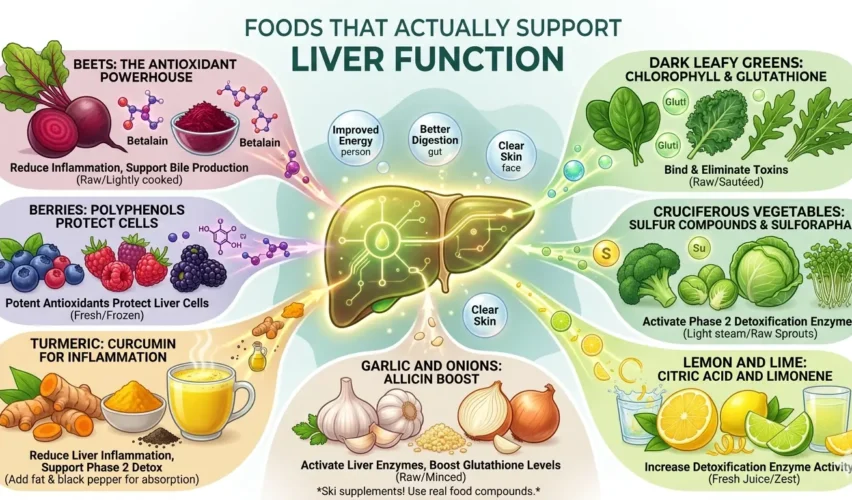
Beets get their deep purple-red color from betalains plant compounds that reduce inflammation and support bile production. Bile is how your liver eliminates waste. Beets are one of the few foods high enough in betalains to actually make a difference. Raw or lightly cooked works best because cooking degrades some of the beneficial compounds.
How to use beets: Roast beets and add to salads, juice them fresh (juice blends better with greens), or grate raw into slaws. A single medium beet daily provides meaningful amounts of betalains. The earthy taste takes getting used to, but it signals that the beneficial compounds are present.
Dark Leafy Greens: Spinach, Kale, Arugula
The darker the green, the more chlorophyll and glutathione. These aren’t marketing terms—they’re specific compounds your liver uses to bind and eliminate toxins. Spinach is gentler than kale if you’re new to this. Kale is more nutrient-dense if you can tolerate the bitterness. Both work. Arugula’s peppery bite makes it easier to eat in volume.
How to use greens: Eat them raw when possible (cooking reduces glutathione by 50%). Raw in salads, blended in smoothies, or quick-sautéed with olive oil and garlic. One to two cups of raw greens daily is the sweet spot. Most people don’t eat enough greens, which is why energy and digestion suffer.
Cruciferous Vegetables: Broccoli, Brussels Sprouts, Cabbage
The sulfur compounds in these vegetables (that’s the smell you notice when cooking them) activate glutathione S-transferase an enzyme that binds toxins for elimination. This isn’t optional nutrition. This is how your body processes toxins when you eat enough of these foods. Most people eat maybe one serving per week. Your liver wants at least three.
How to use them: Steam lightly or eat raw to preserve sulforaphane. Broccoli sprouts have 50x more sulforaphane than mature broccoli. A handful of sprouts in a salad does more for your liver than a full serving of cooked broccoli. If you hate the taste, start with raw broccoli florets dipped in hummus or nut butter.
Lemon and Lime: Citric Acid and Limonene
Fresh citrus contains limonene, a compound that increases liver detoxification enzyme activity. It’s simple but specific. Lemon in water, lemon on salads, lime in smoothies. The acid also stimulates bile production. This is why starting your day with warm lemon water actually makes sense it’s not magical, it’s just supporting a basic liver function.
How to use citrus: Fresh juice or fresh zest. Bottled or heated lemon loses most of the beneficial compounds. One lemon daily is enough to make a measurable difference. Squeeze it on food, add to water, blend into smoothies.
Garlic and Onions: Sulfur Compounds
Garlic contains allicin, a sulfur compound that activates liver enzymes and increases glutathione levels. Raw garlic is more potent than cooked, but cooked garlic still has benefits. The smell is actually a sign that the beneficial compounds are present. Onions work similarly.
How to use them: Mince raw garlic into salads or add to food after cooking (cooking destroys some allicin). One to two cloves daily is meaningful. If raw garlic bothers your stomach, cooked garlic still provides benefits, just fewer.
Turmeric: The Anti-Inflammatory Spice
Curcumin in turmeric reduces liver inflammation and supports Phase 2 detoxification. It’s not absorbed well without fat and black pepper, which is why golden milk (turmeric with coconut milk and black pepper) is actually scientifically sound not just trendy.
How to use it: Add to scrambled eggs, rice, soups. Combine with fat (oil, coconut milk, or animal fat) and black pepper. One teaspoon daily provides measurable amounts of curcumin.
Berries: Antioxidants and Polyphenols
Blueberries, raspberries, and blackberries contain anthocyanins the compound that gives them their color. These are potent antioxidants that protect liver cells from oxidative damage. They’re also delicious, which makes them easy to eat consistently.
How to use them: Fresh when in season, frozen works just as well (freezing preserves polyphenols). Mix into yogurt, blend into smoothies, or eat plain. One cup daily is a meaningful amount.
A Practical Three-Day Eating Plan ( Best liver cleanse diet foods list)
This isn’t a “detox” in the juice-cleanse sense. It’s simply three days of liver cleanse diet foods list that support liver function. You’ll probably feel lighter and have better energy by day two. That’s not the liver clearing toxins that’s your body functioning on proper nutrition for the first time in weeks.
Day 1: Greens and Beets Foundation
Breakfast: Smoothie with spinach, frozen berries, banana, coconut milk, and one tablespoon almond butter. The greens are barely noticeable, but the glutathione is present.
Lunch: Large salad with mixed dark greens (spinach, arugula, kale), shredded raw beets, raw broccoli florets, lemon vinaigrette (lemon juice, olive oil, salt). Add grilled chicken or beans for protein. This meal hits every category of foods your liver needs.
Dinner: Roasted Brussels sprouts (tossed with olive oil and sea salt) with baked salmon or tempeh. Side of quinoa. The sulfur from Brussels sprouts combines with omega-3s from salmon to reduce inflammation. This is how you actually support your liver with real food combinations that work together.
Day 2: Crucifers and Citrus Focus
Breakfast: Scrambled eggs (2-3) with turmeric and black pepper. Side of sautéed spinach with garlic. Squeeze of fresh lemon. The eggs provide choline (supports bile production), turmeric reduces inflammation, and garlic activates detoxification enzymes.
Lunch: Broccoli soup. Sauté broccoli, onion, and garlic in olive oil, add vegetable broth, simmer 15 minutes. Blend smooth. Add coconut milk or regular milk. Season with sea salt and fresh lemon juice. One cup provides significant amounts of sulforaphane.
Dinner: Stir-fried cabbage (red cabbage is more antioxidant-rich) with shiitake mushrooms, garlic, and ginger. Serve over brown rice with a drizzle of sesame oil. The cruciferous base remains, supported by anti-inflammatory compounds from ginger and mushrooms.
Day 3: Diversity and Integration
Breakfast: Oatmeal with berries, ground flax seeds, and cinnamon. The polyphenols from berries combine with lignans from flax to support liver function. Cinnamon helps regulate blood sugar, reducing stress on the liver.
Lunch: Buddha bowl with cooked quinoa, raw kale, roasted beets, chickpeas, shredded carrots, and tahini dressing (tahini, lemon juice, garlic, water). This meal is nutritionally complete and hits all the categories your liver needs.
Dinner: Baked white fish (cod or halibut) with roasted vegetables (broccoli, Brussels sprouts, beets) drizzled with olive oil and lemon. Add turmeric to the fish. This is integrated nutrition every component supports liver function through different pathways.
Doing This Successfully
Start with what you’ll actually eat. If you hate kale, eat spinach. If beets seem weird, start with one roasted beet on a salad. The foods don’t have to match my list exactly. They just need to have the compounds that support liver function.
Consistency matters more than intensity. Eating perfectly for three days then returning to regular habits does almost nothing. Better to eat one serving of dark greens daily for three months than to do an intense three-day plan and stop. Your liver improves from consistent nutrition, not occasional bursts.
Don’t overcomplicate it. You don’t need special smoothies or expensive ingredients. Beets from the regular grocery store, spinach from the regular produce section, and lemon from the regular fruit aisle. That’s it. Add olive oil, salt, and whatever protein you like. Done.
Hydration matters. Your liver needs water to process and eliminate waste. Drink enough that your urine is mostly clear. This isn’t complicated nutrition it’s just basic biology.
The goal is sustainable. You’re not trying to prove something with an intense three days. You’re learning which foods make you feel better, so you can keep eating them. By day three of liver cleanse diet foods list of this plan, you’ve noticed something shifted. Energy improved. Digestion improved. Skin clearer. That’s your body telling you that consistent good nutrition works.
Making This Last Beyond Three Days
The real benefit happens when you continue. One of the most overlooked facts about nutrition is that three days isn’t enough to reset anything. Your body needs consistent good nutrition to make lasting improvements. After your three-day plan, the next step is building these foods into your regular eating pattern.
This doesn’t mean dietary restriction or eliminating foods you enjoy. It means that most days, you’re eating at least one serving of dark greens, one serving of cruciferous vegetables, and one source of healthy fat. Most days, you’re squeezing fresh lemon on food or in water. Most days, you’re not fighting your liver’s capacity.
Your liver regenerates faster than any other organ in your body. Feed it properly for a few months and you’ll notice sustained improvements: more stable energy, better digestion, clearer skin, mental clarity. This isn’t from a three-day liver cleanse diet foods list. It’s from recognizing that how you eat determines how well your liver and everything downstream functions.
The Research Behind Foods That Support Liver Function
The science on nutrition and liver function is comprehensive. Here’s where the evidence comes from:
- Journal of Nutrition and Metabolism – Dietary Compounds and Liver Detoxification – How specific vegetables activate liver enzymes
- Nutrients Journal – Cruciferous Vegetables and Sulforaphane – The specific compound from broccoli that supports liver function
- Journal of the Science of Food and Agriculture – Betalains and Liver Health – Evidence on beets and liver inflammation
- Food & Function – Polyphenols and Liver Protection – Why antioxidants from berries matter for liver cells
Your Liver Will Thank You
Your liver doesn’t ask for much. It just wants to not be overwhelmed. Give it the right nutrition and it handles the toxic load with grace. Ignore it with poor nutrition and it backs up, inflammation increases, everything downstream suffers.
A three-day plan using foods that support liver function is a beginning. It’s the first step of learning how to eat in a way that your liver actually prefers. By day two or three, you’ll probably notice that you feel different. Better energy. Clearer thinking. Better digestion. That’s your liver telling you it’s working properly again.
The next step is making this permanent. Not through intense restriction, but through consistency. One serving of dark greens daily. One serving of cruciferous vegetables daily. One squeeze of fresh lemon daily. Over three months, this compounds into measurable changes in how you look and feel. Your liver is one of the few organs that genuinely regenerates. Feed it what it needs and it comes back stronger than before.
Hydration Homemade Electrolyte Drink Recipe