Your HIIT sessions are brutal by design. Thirty seconds of all-out burpees followed by ten seconds of gasping for air. Twenty minutes of pure intensity that leaves you sweating through your shirt and questioning your life choices. You finish these workouts feeling accomplished, but also completely empty. That depletion isn’t just fatigue it’s your body screaming for the fuel it burned through during those explosive intervals. Understanding nutrition for HIIT workout performance means knowing exactly what to eat, when to eat it, and why timing matters more than you think.
HIIT depletes your glycogen stores faster than any other training style. Your muscles need quick-burning carbohydrates during those intense bursts, and they need protein afterward to repair the damage you’ve deliberately created. Getting nutrition for HIIT workout performance right transforms your results. You recover faster, perform better during the next session, and actually build the lean muscle that makes HIIT worth doing in the first place. Getting it wrong leaves you tired, weak, and spinning your wheels despite the effort you’re putting in.
Let’s breaking down the complete system for nutrition for HIIT workout performance what to eat in the two hours before training, what works during those short rest periods, and the critical post-workout window where your body is most receptive to nutrients. You’ll learn which carb-protein combinations actually work, why leg day HIIT sessions demand different fueling than upper body circuits, and how to time everything so you’re never bonking mid-burpee or feeling nauseous from eating too close to your workout.
Why Nutrition for HIIT Workout Performance is Different from Other Training
HIIT operates in a metabolic zone most other exercise never touches. You’re working at 85-95% of your maximum heart rate during work intervals, forcing your body to produce energy through anaerobic pathways that don’t use oxygen efficiently. This burns through stored muscle glycogen at an alarming rate studies show HIIT can deplete glycogen stores by 30-40% in just twenty minutes of work.
Compare this to steady-state cardio, where you’re working at 60-70% max heart rate and your body can efficiently use fat and oxygen for energy. Steady cardio doesn’t demand the same aggressive approach to nutrition for HIIT workout performance because it doesn’t create the same metabolic stress. You can do a one-hour easy run fasted and feel fine. Try doing twenty minutes of maximum-effort HIIT fasted and you’ll understand why nutrition for HIIT workout performance requires a completely different strategy.
The work-to-rest ratio in HIIT creates unique demands. During those thirty-second all-out efforts, your muscles are screaming for glucose. During the ten-second rest periods, your body is desperately trying to clear lactate and prepare for the next round. Proper nutrition for HIIT workout performance supports both phases providing quick energy during work intervals and enabling rapid recovery during rest periods.
Leg day HIIT creates even more extreme demands because lower body exercises recruit larger muscle groups. Jump squats, box jumps, and burpees with a pushup use more total muscle mass than upper body movements, which means they burn more glycogen per interval. This is why nutrition for HIIT workout performance becomes absolutely critical when your workout involves legs you’re asking the biggest muscles in your body to produce maximum power repeatedly while operating on limited fuel.
The Two-Hour Window: Pre-Workout Nutrition for HIIT Workout Performance
Eating too close to HIIT makes you nauseous. The intense nature of the work creates competition for blood flow your digestive system needs blood to process food, but your muscles are demanding every available drop during those maximum-effort intervals. Getting pre-workout nutrition for HIIT workout performance right means eating early enough that digestion is mostly complete but recent enough that the nutrients are still available.
Two hours before your HIIT session is the sweet spot for most people. This gives your stomach time to empty while keeping blood sugar and energy stores elevated. What you eat during this window directly impacts how well you perform during those brutal intervals twenty minutes from now.
Carbohydrates form the foundation of pre-workout nutrition for HIIT workout performance. You need easily digestible carbs that convert to glucose quickly without sitting heavy in your stomach. White rice, white potatoes, oatmeal, bananas, and white bread all work better than whole grain alternatives because they digest faster. Save the fiber-rich whole grains for meals far away from training they slow digestion, which is exactly what you don’t want right before asking your body to perform at maximum capacity.
A proper pre-HIIT meal two hours out might look like this: one cup of cooked white rice with four ounces of grilled chicken breast, plus half a banana. This provides approximately 60 grams of carbohydrates and 25 grams of protein. The carbs fill your glycogen stores. The protein provides amino acids that will be available during and after your workout. The banana adds quick-digesting natural sugars plus potassium, which helps prevent cramping during intense leg exercises.
Another option for pre-workout nutrition for HIIT workout performance: two slices of white toast with two tablespoons of natural peanut butter and honey, plus a small apple. This gives you simple carbs from the bread and honey, sustained energy from the peanut butter’s healthy fats, and additional quick carbs from the apple. Total: approximately 50 grams of carbs, 10 grams of protein, 16 grams of fat. The fat content is higher here, which some people tolerate well and others find makes them sluggish. Test both approaches during training sessions to see what your body prefers.
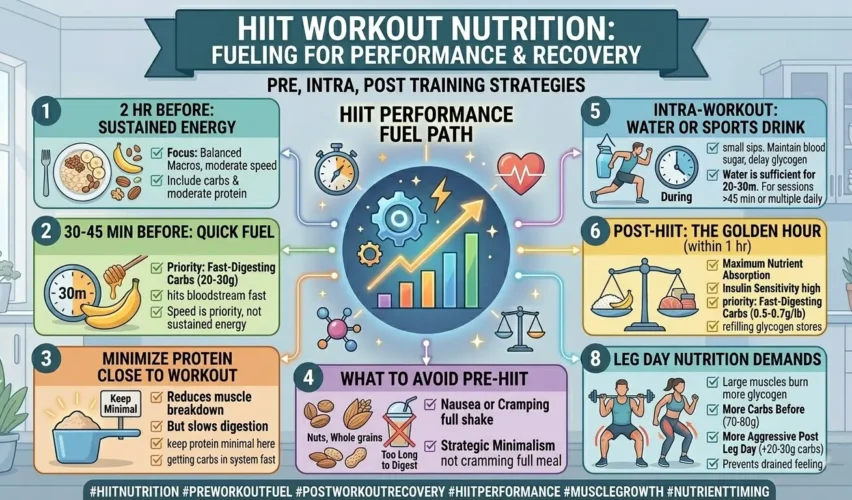
For early morning HIIT sessions, the two-hour window doesn’t exist. You’re not waking up at 4am to eat before a 6am workout. In this case, nutrition for HIIT workout performance shifts to the night before. Eat a larger dinner with substantial carbohydrates pasta, rice, potatoes, to ensure your glycogen stores are topped off. Then have a small, quick-digesting snack 30-45 minutes before your morning session: half a banana with a tablespoon of honey, or a small smoothie with fruit and protein powder. This provides immediate energy without requiring full digestion.
The 30-Minute Snack: Quick Fuel for Nutrition for HIIT Workout Performance
If you can’t eat two hours before your HIIT session, or if you’re training after work and your last meal was lunch six hours ago, you need a strategic snack 30-45 minutes before training. This snack must be small, extremely easy to digest, and carbohydrate-focused with minimal fat and fiber.
Effective 30-minute snacks for nutrition for HIIT workout performance include a banana with a small squeeze of honey, a serving of applesauce, a few dates, or a small smoothie made with just fruit and water. These provide 20-30 grams of quick-digesting carbohydrates that hit your bloodstream fast without sitting in your stomach during burpees.
Some people add a small amount of protein to this snack maybe half a scoop of whey protein powder mixed with the smoothie, or a few bites of Greek yogurt with the banana. The protein provides amino acids that reduce muscle breakdown during your HIIT session. But keep protein minimal here because it slows digestion. The priority this close to training is speed getting carbs into your system as fast as possible.
What doesn’t work 30 minutes before HIIT: Anything with significant fat, fiber, or volume. Don’t eat nuts, nut butter, whole grain bread, large portions of anything, or full protein shakes this close to training. These take too long to digest and will cause nausea or cramping during your workout. Nutrition for HIIT workout performance this close to training is about strategic minimalism, not trying to cram in a full meal.
During Your HIIT Session: Do You Need Intra-Workout Nutrition?
Most HIIT sessions last 20-30 minutes. You don’t need to eat during a twenty-minute workout. Your body has enough stored glycogen to power through that duration even if you didn’t fuel perfectly beforehand. Intra-workout nutrition for HIIT workout performance only becomes relevant for extended sessions 45 minutes or longer, or for people doing multiple HIIT sessions in one day.
If your HIIT session extends past 40 minutes, or if you’re doing a second session later the same day, sipping a sports drink or diluted fruit juice during rest periods can help maintain blood sugar and delay glycogen depletion. This isn’t about chugging a full bottle between burpees it’s about taking small sips during your designated rest intervals to provide a steady trickle of glucose.
A simple intra-workout option: mix 4-6 tablespoons of honey or dextrose powder into a liter of water. Sip this during rest periods. This provides approximately 40-60 grams of carbohydrates spread across your session, helping maintain performance during the later intervals when glycogen starts running low.
For most people doing standard 20-30 minute HIIT sessions, water is sufficient during training. Save your nutrition focus for before and after. Trying to drink anything substantial during intense work intervals usually results in sloshing stomach and nausea. Proper pre-workout nutrition for HIIT workout performance should carry you through the session without needing additional fuel.
The Golden Hour: Post-Workout Nutrition for HIIT Workout Performance
The hour immediately after HIIT is when nutrition for HIIT workout performance becomes most critical. Your muscles are glycogen-depleted and insulin-sensitive, meaning they’ll absorb nutrients faster and more completely than at any other time. Your muscle protein synthesis is elevated, making this the prime window for protein to drive recovery and adaptation. Missing this window doesn’t ruin your progress, but capitalizing on it accelerates recovery and prepares you for the next session.
Carbohydrates are the priority immediately post-HIIT. You’ve depleted 30-40% of your glycogen stores in twenty minutes of maximum effort. Those stores need refilling. Research shows consuming 0.5-0.7 grams of carbohydrates per pound of body weight within 30-60 minutes post-workout optimizes glycogen replenishment. For a 150-pound person, that’s 75-105 grams of carbs. For a 200-pound person, it’s 100-140 grams.
These should be fast-digesting carbs that spike insulin and drive nutrients into muscle cells rapidly. White rice, white potatoes, white bread, rice cakes, fruit juice, ripe bananas, dates, and sports drinks all work perfectly for post-workout nutrition for HIIT workout performance. This is not the time for brown rice or whole wheat bread you want speed, not sustained energy.
Protein should accompany those carbs in a 3:1 or 4:1 ratio of carbs to protein. So if you’re eating 80 grams of carbs post-workout, pair them with 20-25 grams of protein. This protein provides amino acids for muscle repair and enhances the insulin response that drives nutrients into cells. Fast-digesting proteins work best: whey protein isolate, egg whites, or very lean chicken breast.
A practical post-workout meal for nutrition for HIIT workout performance might look like this: a protein smoothie made with one scoop whey protein, one large banana, one cup frozen berries, and one cup fruit juice. This provides approximately 90 grams of carbohydrates and 25 grams of protein perfect ratios for a 160-180 pound person after a brutal leg-day HIIT session.
Another option: four ounces of grilled chicken breast with one and a half cups of white rice and steamed vegetables. Add a small glass of fruit juice or a piece of fruit on the side to boost the carb content. This whole-food approach provides approximately 85 grams of carbs and 30 grams of protein, hitting the targets while being more satisfying than a liquid shake for people who prefer chewing their food after training.
Don’t fear the sugar immediately post-HIIT. This is the one time when simple sugars are not only acceptable but beneficial for nutrition for HIIT workout performance. Honey, fruit, juice, even gummy bears if that’s your preference these spike blood sugar and insulin, which drives nutrients into muscle cells for recovery. Save the “clean eating” for meals later in the day. Right now, your muscles are depleted and hungry for quick fuel.
Leg Day HIIT: Why It Demands More Aggressive Nutrition
Leg-focused HIIT sessions create metabolic demands unlike any other training. Exercises like jump squats, box jumps, burpees, kettlebell swings, and sprint intervals recruit the largest muscle groups in your body quads, hamstrings, glutes. Larger muscles burn more glycogen per contraction. A twenty-minute leg day HIIT session depletes glycogen stores more completely than a twenty-minute upper body circuit.
This means nutrition for HIIT workout performance becomes even more critical when legs are involved. You need more carbohydrates before training to fuel those large muscles. You need more carbohydrates after training to replenish what you’ve depleted. Skimping on either leaves you flat, weak, and unable to maintain intensity during future sessions.
Before leg day HIIT, aim for the higher end of your carbohydrate range. If you normally eat 50 grams of carbs two hours before upper body HIIT, increase that to 70-80 grams before leg day. Your quads, hamstrings, and glutes need that extra fuel to produce maximum power during jumps and sprints.
After leg day HIIT, be even more aggressive with post-workout nutrition for HIIT workout performance. Add an extra 20-30 grams of carbs to your standard post-workout meal. If you normally have 80 grams of carbs after training, bump it to 100-110 grams after legs. This ensures complete glycogen replenishment so you’re not starting your next workout already depleted.
The fatigue you feel after leg day HIIT is real and directly related to glycogen depletion. When people say “leg day wrecked me,” part of that is muscular damage, but a significant portion is metabolic—you’ve burned through more stored energy than your body is used to managing. Strategic nutrition for HIIT workout performance specific to leg days prevents that completely-drained feeling and speeds recovery dramatically.
Carb-Protein Snack Combinations for Optimal HIIT Performance
Knowing you need carbs and protein is one thing. Knowing which combinations taste good, digest well, and provide the right ratios is what makes nutrition for HIIT workout performance practical instead of theoretical. Here are tested combinations that work for real people during real training.
Pre-Workout Carb-Protein Snacks (2 hours before):
Rice cakes with almond butter and sliced banana three rice cakes, one tablespoon almond butter, half a banana. Provides 45g carbs, 8g protein, easily digestible.
Greek yogurt with honey and berries one cup nonfat Greek yogurt, two tablespoons honey, half cup berries. Provides 50g carbs, 20g protein, moderate digestion speed.
Oatmeal with protein powder half cup dry oats cooked, half scoop vanilla protein powder mixed in, drizzle of maple syrup. Provides 40g carbs, 15g protein, sustained energy.
Quick Pre-Workout Snacks (30-45 minutes before):
Banana with honey one medium banana, one tablespoon honey drizzled on top. Provides 35g carbs, minimal protein, extremely fast digestion.
Apple with a few bites of jerky one medium apple, 1oz beef or turkey jerky. Provides 25g carbs, 10g protein, surprisingly effective combination.
Dates with a small protein shake four medjool dates, half scoop protein powder mixed with water. Provides 40g carbs, 12g protein, fast-acting fuel.
Post-Workout Carb-Protein Meals (within 60 minutes):
Protein shake with fruit one scoop whey protein, one banana, one cup mixed berries, one cup orange juice, ice. Provides 85g carbs, 25g protein, liquid for fast absorption.
Chicken and sweet potato four ounces grilled chicken, one large sweet potato, small side of fruit. Provides 75g carbs, 30g protein, whole food satisfaction.
Egg whites and toast with jam six egg whites scrambled, two slices white toast with jam, glass of fruit juice. Provides 70g carbs, 25g protein, easy to prepare.
These combinations aren’t random they’re designed to hit specific macronutrient ratios that support nutrition for HIIT workout performance at different training phases. Test them during your regular training schedule to find what your stomach tolerates best under stress.
Hydration: The Missing Element in Nutrition for HIIT Workout Performance
HIIT makes you sweat more per minute than steady cardio because the intensity is higher and your core temperature spikes dramatically. A twenty-minute HIIT session can produce the same fluid loss as a sixty-minute easy run. Starting your workout dehydrated or failing to rehydrate afterward undermines everything else you’re doing right with nutrition for HIIT workout performance.
Two to three hours before HIIT, drink 16-20 ounces of water. This ensures you’re well-hydrated before training starts. Don’t chug a liter of water thirty minutes before your workout it’ll slosh around in your stomach during burpees and make you miserable.
During HIIT, take small sips of water during rest periods. You don’t need to drain a full bottle during a twenty-minute session, but keeping your mouth moist and replacing the fluid you’re sweating out helps maintain performance during later intervals.
After HIIT, weigh yourself if possible. For every pound lost during training, drink 16-24 ounces of fluid over the next few hours. This gradual rehydration is more effective than chugging huge amounts immediately post-workout. If you’re having your post-workout shake or meal with significant liquid content, that counts toward rehydration.
Electrolytes matter for HIIT lasting more than thirty minutes or when you’re training in heat. Sodium, potassium, and magnesium all leave your body through sweat. Plain water replaces fluid but not minerals. For longer sessions or second workouts in the same day, add electrolyte powder to your water or drink coconut water post-workout. This aspect of nutrition for HIIT workout performance is often overlooked but impacts recovery and performance in subsequent sessions.
Common Mistakes People Make with Nutrition for HIIT Workout Performance
Mistake #1: Training Completely Fasted
Some people try doing HIIT first thing in the morning with nothing but black coffee in their system. This works for steady-state cardio but fails for HIIT because the intensity demands immediate glucose availability. Training fasted means your body breaks down muscle tissue for fuel during those maximum efforts. You’re literally eating your own muscles. Even a small banana before morning HIIT protects muscle mass and improves performance. Don’t sabotage your training with unnecessary fasting when nutrition for HIIT workout performance is this straightforward.
Mistake #2: Eating Too Close to Training
Having a full meal thirty minutes before HIIT guarantees nausea during your workout. The intense nature of the intervals diverts blood away from digestion, leaving partially digested food sitting in your stomach while you’re trying to perform box jumps. Honor the two-hour window for real meals or stick to tiny, easily digestible snacks if training happens unexpectedly soon.
Mistake #3: Skipping Post-Workout Nutrition
Some people finish their HIIT session, shower, and go about their day without eating for hours. This wastes the prime anabolic window when your muscles are most receptive to nutrients. Delaying post-workout nutrition for HIIT workout performance means slower recovery, more soreness, and reduced performance in your next session. Even if you’re not hungry immediately after training hich is common because intense exercise suppresses appetite, force down a protein shake or have a planned meal within ninety minutes.
Mistake #4: Using Only Protein Shakes
Protein is important, but HIIT depletes glycogen primarily. A pure protein shake after HIIT doesn’t refill your muscle glycogen stores because protein doesn’t convert to glucose efficiently. You need carbohydrates. A protein shake with just protein powder and water fails to support complete recovery. Add fruit, juice, or pair the shake with actual carbohydrate sources to make nutrition for HIIT workout performance effective.
Mistake #5: Choosing Complex Carbs at Wrong Times
Brown rice, whole wheat bread, and sweet potatoes are nutritious, but they digest slowly because of their fiber content. Eating these immediately before or after HIIT defeats the purpose. You want fast digestion and rapid nutrient delivery during these windows. Save complex carbs for meals far from training. During the critical windows surrounding HIIT, simple carbohydrates perform better for nutrition for HIIT workout performance.
Putting It All Together: A Full Day of Nutrition for HIIT Workout Performance
Here’s what a complete day looks like when you’re training HIIT at 5pm after work and taking nutrition for HIIT workout performance seriously.
8:00am – Breakfast: Three scrambled eggs with spinach, two slices whole wheat toast with butter, one orange. This provides balanced macros and starts your day with quality nutrition far from your workout.
11:00am – Lunch: Grilled chicken breast, large mixed green salad with olive oil dressing, quinoa, roasted vegetables. Another balanced meal providing sustained energy through your afternoon but timed early enough not to interfere with pre-workout nutrition.
3:00pm – Pre-Workout Meal (2 hours before HIIT): One cup white rice, four ounces grilled salmon, steamed broccoli, half a banana. This meal provides approximately 65 grams of carbohydrates and 30 grams of protein, specifically timed for optimal digestion before your 5pm session.
4:30pm – Quick Pre-Workout Snack: One medium banana with one tablespoon honey if you’re feeling low on energy. Optional depending on how you felt after the 3pm meal.
5:00pm – HIIT Workout: Twenty-five minutes of maximum-effort intervals including burpees, box jumps, kettlebell swings, and sprint intervals. Water sipped during rest periods.
5:30pm – Post-Workout Shake (immediately after): One scoop whey protein, one banana, one cup frozen berries, one cup orange juice, ice. Blended and consumed within twenty minutes of finishing training. Provides approximately 90 grams of carbohydrates and 25 grams of protein perfect ratios for a 170-pound person after intense leg-focused HIIT. Hydration Drinks are also important as an alternative
7:30pm – Dinner: Grass-fed beef burger on a bun with sweet potato fries and a side salad. A satisfying meal that provides additional protein and carbs for continued recovery without being another calculated performance meal.
9:30pm – Evening Snack (optional): Greek yogurt with berries if hungry before bed. Provides casein protein for overnight muscle repair.
This day demonstrates how nutrition for HIIT workout performance integrates into normal eating. You’re not following some extreme protocol you’re simply timing your carbohydrates strategically around training and ensuring adequate protein throughout the day.
Final Thoughts
You now understand the complete system for fueling maximum-effort training. You know that HIIT depletes glycogen faster than any other exercise, demanding strategic carbohydrate timing before and after sessions. You understand why leg day HIIT requires even more aggressive fueling than upper body work. You have specific meal and snack examples that provide the right macronutrient ratios at the right times.
Getting nutrition for HIIT workout performance right isn’t complicated, but it does require planning. You can’t expect to crush a twenty-minute HIIT session on an empty stomach or recover properly with just water afterward. Your body needs fuel specific macronutrients delivered at specific times relative to training.
Start implementing these strategies this week. Eat a proper carb-protein meal two hours before your next HIIT session and notice how much better you perform during those later intervals. Have your post-workout shake ready immediately after training and feel how much faster you recover. Once you experience the difference that proper nutrition for HIIT workout performance makes, you’ll never go back to winging it and hoping for the best.