Your gut is basically the control center of your health. It’s not just about digestion your gut bacteria influence your immune system, mood, energy levels, and even your metabolism. The problem? Most of us aren’t feeding these bacteria what they need.
Here’s the good news: you don’t need expensive supplements or complicated regimens. You just need to eat the right foods that feed good gut bacteria. In this guide, I’m sharing 10 proven foods that feed good gut bacteria, complete with easy recipes and meal plans you can start today.
Why Foods That Feed Good Gut Bacteria Actually Matter
When you eat foods that feed good gut bacteria, you’re not just improving digestion. You’re feeding microorganisms that produce compounds your body needs to function properly. These bacteria create short-chain fatty acids like butyrate, which directly nourish your gut lining and reduce inflammation throughout your body.
Recent research from the National Institute of Health’s Microbiome Database shows that consistent consumption of foods that feed good gut bacteria can increase beneficial bacterial populations by 30-40% within just 3-4 weeks. That’s a significant shift using just dietary changes.
70% of your immune system lives in your gut. Foods that feed good gut bacteria directly strengthen immunity.
90% of serotonin is produced in your gut. Feeding good bacteria improves mood naturally.
2-3 weeks is all it takes to notice changes when eating foods that feed good gut bacteria consistently.
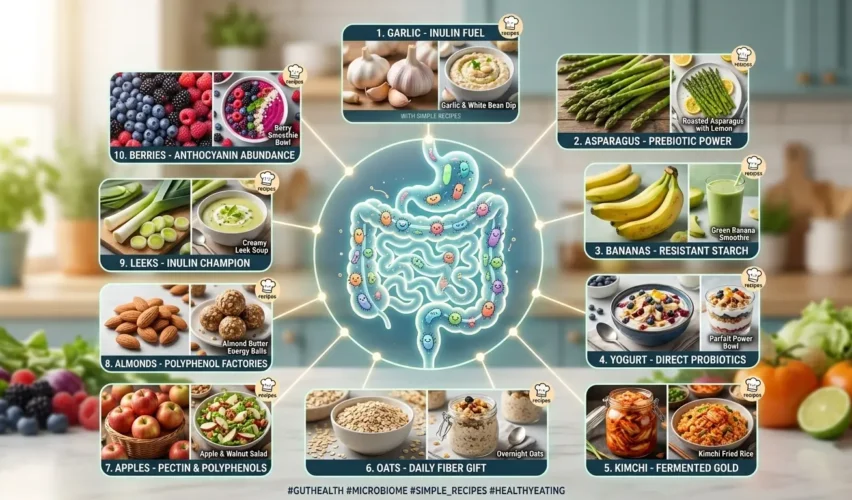
10 Foods That Feed Good Gut Bacteria (With Simple Recipes)
1. Garlic: Your Bacteria’s Favorite Fuel
Garlic contains inulin, a prebiotic fiber that your own digestive system can’t break down but your bacteria absolutely love it. One clove provides enough fuel for beneficial bacteria to thrive for hours.
🍳 Quick Recipe: Garlic & White Bean DipRoast 4 garlic cloves at 400°F for 20 minutes. Blend with one can white beans, 2 tbsp olive oil, lemon juice, and salt. Serve with vegetables or whole grain bread. (This simple dip feeds good gut bacteria while tasting delicious.)
Why it works: Inulin ferments in your colon, producing butyrate that heals your gut lining and reduces inflammation.
2. Asparagus: The Prebiotic Powerhouse
Six spears of asparagus deliver 2-2.5g of inulin enough to make a real difference in foods that feed good gut bacteria. It’s basically nature’s gut health supplement.
🍳 Quick Recipe: Roasted Asparagus with LemonToss asparagus with olive oil, minced garlic, salt, and pepper. Roast at 425°F for 12 minutes. Finish with lemon juice and parmesan. Pair with grilled chicken or fish for a complete meal that feeds good gut bacteria.
Why it works: Asparagus feeds Bifidobacteria one of the most beneficial species for digestive and metabolic health.
3. Bananas: The Resistant Starch Secret
Here’s what most people miss: slightly underripe bananas contain resistant starch, which acts like fertilizer for your good bacteria. Ripe bananas are fine, but green ones are the gut-feeding powerhouses.
🍳 Quick Recipe: Green Banana SmoothieBlend one slightly green banana, 1 cup unsweetened almond milk, 1/2 cup plain Greek yogurt (probiotics), and 1 tbsp almond butter. Add ice and blend. This drink literally feeds good gut bacteria while keeping you satisfied.
Why it works: Resistant starch reaches your colon intact, where bacteria ferment it into short-chain fatty acids that reduce inflammation.
4. Yogurt: Direct Bacterial Inoculation
Unlike the other foods that feed good gut bacteria, yogurt actually contains the live bacteria themselves. Plain yogurt is your best choice avoid sweetened varieties that feed the bad bacteria instead.
🍳 Quick Recipe: Parfait Power BowlLayer 1 cup plain Greek yogurt with 1/2 cup blueberries, 1/4 cup granola, and 1 tbsp raw honey. That’s it. This simple combination provides probiotics, prebiotics, and polyphenols everything needed for optimal gut health.
Why it works: Yogurt contains Lactobacillus and Bifidobacterium strains that directly colonize your gut and improve digestion immediately.
5. Kimchi: Fermented Gut Gold
Fermented foods are like concentrated versions of foods that feed good gut bacteria. Kimchi contains multiple probiotic strains plus the compounds they’ve already created. It’s digestive insurance in a jar.
🍳 Quick Recipe: Kimchi Fried Rice. Heat 1 tbsp sesame oil, add 2 cups cooked rice, 1 cup chopped kimchi with juice, 1 cup vegetables, and 2 beaten eggs. Stir-fry 3-4 minutes. Top with sesame seeds. This meal feeds good gut bacteria while tasting indulgent.
Why it works: Fermentation creates beneficial bacteria plus their metabolites you’re getting compound interest on gut health.
6. Oats: The Daily Fiber Gift
Oats contain beta-glucan, a soluble fiber that feeds multiple beneficial bacterial species. One bowl of oatmeal provides enough fiber to shift your microbiome over weeks of consistent consumption.
🍳 Quick Recipe: Overnight OatsMix 1/2 cup rolled oats, 1/2 cup plain yogurt, 1/2 cup almond milk, 1/2 apple (sliced), and 1 tbsp almond butter. Refrigerate overnight. Eat cold or warm up in the morning. This meal is convenience plus microbiome support.
Why it works: Beta-glucan fermentation produces butyrate the fuel your gut cells literally run on for energy and healing.
7. Apples: Pectin and Polyphenol Power
Apples contain pectin (prebiotic fiber) plus polyphenols that your body can’t fully absorb. Instead, they reach your colon where bacteria ferment them into beneficial compounds. Always eat the skin that’s where most benefits live.
🍳 Quick Recipe: Apple & Walnut Salad. Slice 1-2 apples, toss with mixed greens, 1/4 cup walnuts, and 2 tbsp balsamic vinegar with 1 tbsp olive oil. Add crumbled goat cheese if desired. This salad feeds good gut bacteria while delivering polyphenols from multiple sources.
Why it works: Apple polyphenols specifically feed Akkermansia muciniphila bacteria strongly linked to healthy metabolism and weight management.
8. Almonds: Polyphenol Factories
One ounce of almonds contains 40mg of polyphenols that your digestive system can’t process. Perfect because that means your gut bacteria get to feast on them instead.
🍳 Quick Recipe: Almond Butter Energy BallsMix 1 cup oats, 1/2 cup almond butter, 1/3 cup honey, 1/4 cup cocoa powder. Roll into balls, refrigerate. These taste like dessert but you’re literally feeding good gut bacteria with every bite.
Why it works: Almond polyphenols ferment into compounds that increase beneficial bacteria diversity the gold standard of gut health.
9. Leeks: The Overlooked Prebiotic
Leeks contain even more inulin than garlic, but they’re less pungent, making them easier to eat in quantity. One cup of cooked leeks provides 1.4g of this bacteria-feeding fiber.
🍳 Quick Recipe: Creamy Leek Soup Sauté 3 sliced leeks in 1 tbsp olive oil for 5 minutes. Add 4 cups vegetable broth, 2 diced potatoes. Simmer 20 minutes. Blend until smooth. Stir in 1/2 cup Greek yogurt. This comfort food becomes a microbiome-healing meal.
Why it works: Leek inulin feeds both Bifidobacteria and Faecalibacterium two essential species for gut barrier integrity.
10. Berries: Anthocyanin Abundance
Blueberries, blackberries, and raspberries are packed with anthocyanins polyphenols that reach your colon intact. They’re basically prescription medication for your gut bacteria, wrapped in a delicious package.
🍳 Quick Recipe: Berry Smoothie BowlBlend 1 cup mixed berries, 1/2 cup Greek yogurt, 1/4 cup almond milk. Pour into bowl. Top with granola, coconut flakes, and a few more berries. Eat with a spoon. This is the perfect foods that feed good gut bacteria breakfast that actually tastes indulgent.
Why it works: Anthocyanins increase Akkermansia populations, which produce mucin—the protective layer lining your gut.
Your Foods That Feed Good Gut Bacteria Meal Plan
You don’t need to eat all 10 foods daily. Even rotating through 4-5 of them creates significant microbiome changes within weeks. Here’s a simple 3-day example:
Day 1
Breakfast: Overnight oats with banana and almonds
Lunch: Apple & walnut salad
Dinner: Roasted asparagus + grilled chicken + garlic white bean dip
Snack: Greek yogurt with blueberries
Day 2
Breakfast: Berry smoothie bowl
Lunch: Leek soup with whole grain bread
Dinner: Kimchi fried rice with vegetables
Snack: Apple with almond butter
Day 3
Breakfast: Green banana smoothie with yogurt
Lunch: Garlic white bean dip with veggie sticks
Dinner: Roasted asparagus + fish + wild rice
Snack: Almond butter energy balls
Making Foods That Feed Good Gut Bacteria a Habit
Start Small: Don’t try to eat all 10 foods this week. Pick 2-3 and rotate them. Consistency beats perfection. A person eating the same foods that feed good gut bacteria daily sees better results than someone who eats more variety sporadically.
Cook Simple: Fancy recipes aren’t necessary. Roasted vegetables, simple soups, and basic smoothies are enough. The bacteria don’t care how Instagram-worthy your meal looks.
Expect Changes: Within 3-7 days of eating foods that feed good gut bacteria consistently, you’ll notice your digestion improving. Energy increases. Sleep quality improves. Cravings decrease. These aren’t placebo they’re your bacteria literally producing beneficial compounds.
Keep Fresh Foods: The fresher the food, the more alive the bacteria and enzymes. If buying kimchi, look for refrigerated options. Fresh garlic beats pre-minced. When eating foods that feed good gut bacteria, freshness matters.
Learn More About Foods That Feed Good Gut Bacteria
Want to go deeper on microbiome science? Here are trusted sources backed by research:
- National Institutes of Health (NIH) – Microbiome Research Database – Peer-reviewed studies on foods that feed good gut bacteria and bacterial populations
- Nature Microbiology Journal – Latest research on how specific foods that feed good gut bacteria affect your microbiome
- Stanford Microbiome Therapy Center – Cutting-edge research on prebiotic and probiotic effectiveness
- Britannica’s Microbiome Basics – Clear explanations of gut bacteria and how foods that feed good gut bacteria work at the cellular level
The Bottom Line on Foods That Feed Good Gut Bacteria
You don’t need supplements. You don’t need expensive protocols. You just need to consistently eat foods that feed good gut bacteria. Pick any 3-4 from this list and rotate them. Garlic, asparagus, bananas, yogurt, kimchi, oats, apples, almonds, leeks, and berries are all scientifically proven to shift your microbiome toward beneficial bacteria.
Start today. Try the green banana smoothie for breakfast or the garlic white bean dip at lunch. Your gut bacteria are literally waiting for this fuel. Within weeks, you’ll feel the difference better digestion, more energy, clearer thinking. That’s what happens when you feed good gut bacteria consistently.
Your microbiome isn’t something you fix once and forget about. It’s an ongoing relationship. Feed it right, and it feeds your health right back.
17 Best Foods to Avoid on Renal Diet