
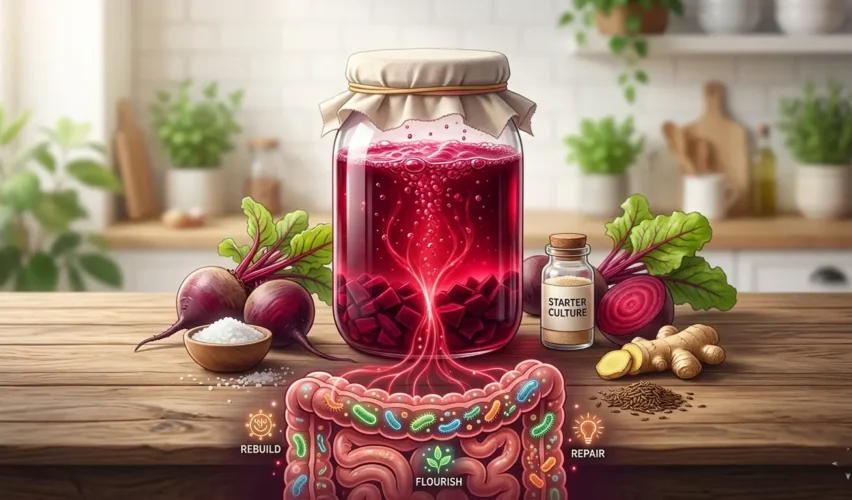
Your digestive system feels off. You experience bloating, irregular digestion, and that persistent feeling that something is out of balance. You’ve tried probiotics from every supplement brand, but results remain modest. This is where homemade beet kvass changes everything. This fermented Eastern European tonic contains live beneficial bacteria that colonize your gut naturally, plus compounds from beets that directly support digestive healing. Unlike commercial probiotics, homemade beet kvass is alive, inexpensive to make, and tastes genuinely enjoyable rather than like medicine.
Homemade beet kvass works because it delivers multiple mechanisms of healing simultaneously. The fermentation process creates beneficial bacteria strains specifically adapted to human gut environments. The beet content provides betaine, which supports liver detoxification and nutrient processing. The mineral-rich fermentation byproducts restore electrolyte balance that bloating often disrupts. When you understand how homemade beet kvass for microbiome repair actually functions, you recognize why Eastern European cultures have relied on this tonic for centuries for digestive health.
I’m sharing the complete homemade beet kvass for microbiome repair formula used by wellness practitioners, the exact science explaining why it works better than most probiotics, and step-by-step instructions for making it in your own kitchen using USA-sourced beets. Most people see dramatic bloating reduction and improved digestion within one week of consistent homemade beet kvass for microbiome repair consumption.
The Science Behind Homemade Beet Kvass
Homemade beet kvass works through fermentation rather than supplementation. When you ferment beets with salt and beneficial starter cultures, you create an environment where Lactobacillus and Pediococcus bacteria naturally proliferate. These aren’t random bacteria. They’re species specifically evolved to thrive in human digestive systems. Every batch of homemade beet kvass contains billions of these living microorganisms, far exceeding what commercial probiotics deliver in tiny capsules.
Research from the Journal of Applied Microbiology shows that fermented vegetable beverages like homemade beet kvass for microbiome repair increase beneficial bacteria colonization more effectively than isolated probiotic strains. The fermentation process produces organic acids, bacteriocins, and other compounds that create an inhospitable environment for pathogenic bacteria while nurturing beneficial species. Homemade beet kvass for microbiome repair essentially teaches your gut to repair itself naturally.
Beyond the bacteria themselves, homemade beet kvass for microbiome repair provides nutritional factors that support microbiome health. Beets contain betalains, powerful antioxidants that reduce intestinal inflammation. The fermentation process increases bioavailability of these compounds, meaning your body absorbs more from homemade beet kvass for microbiome repair than from raw beets. Additionally, the salt used in fermentation isn’t harmful. It’s essential for mineral balance and supports the electrolyte loss that accompanies bloating and poor digestion.
Homemade beet kvass creates billions of beneficial bacteria through fermentation, far exceeding commercial probiotic supplement counts.
Lactobacillus and Pediococcus strains in homemade beet kvass are specifically adapted to human guts, unlike many supplement strains.
Fermentation compounds in homemade beet kvass actively suppress pathogenic bacteria while supporting beneficial colonization.
Beet compounds in homemade beet kvass reduce intestinal inflammation, addressing root causes of bloating rather than symptoms.
The Master Recipe for Homemade Beet Kvass for Microbiome Repair
Complete Homemade Beet Kvass
This is the foundational homemade beet kvass formula that works across all variations. Once you master this basic, you’ll understand the principles needed to create variations. Every batch of homemade beet kvass takes less than 15 minutes of active work, though fermentation requires five to seven days of patience. The results transform your digestive health completely.
Ingredients for Homemade Beet Kvass: Two pounds organic beets (preferably USA-sourced), peeled and cut into quarter-inch pieces. Two quarts filtered water or spring water. Two tablespoons sea salt (unrefined, as this homemade beet kvass requires minerals). One tablespoon raw vegetable starter culture or whey (if available for your homemade beet kvass, though not strictly necessary). Optional additions for your homemade beet kvass: one two-inch piece fresh ginger, two to three whole cloves, or one teaspoon caraway seeds for digestive support.
Equipment for Homemade Beet Kvass: One two-quart glass jar (avoid plastic or metal). Cheesecloth or coffee filter. Rubber band. Fine mesh strainer. Glass bottles for storage of your finished products.
Step-by-Step Instructions for Homemade Beet Kvass
Day One of Homemade Beet Kvass:Prepare your glass jar for homemade beet kvass for microbiome repair by rinsing thoroughly with hot water but avoid soap (soap residue inhibits fermentation in homemade beet kvass for microbiome repair). Place cut beet pieces in the jar. Dissolve sea salt completely in filtered water. This salt brine is essential for homemade beet kvass for microbiome repair success because it creates an environment where beneficial bacteria thrive while pathogenic bacteria cannot. Pour the brine over beets, ensuring all pieces are submerged (important for homemade beet kvass for microbiome repair to prevent mold). If using starter culture or whey, add it now to homemade beet kvass for microbiome repair for faster fermentation. Cover the jar loosely with cheesecloth secured with a rubber band. This covering allows gases from homemade beet kvass for microbiome repair fermentation to escape while preventing dust contamination.
Days Two Through Five of Homemade Beet Kvass: Leave your homemade beet kvass undisturbed at room temperature, away from direct sunlight. The liquid will gradually transform from clear to deep purple or dark red, indicating active fermentation in your homemade beet. By day three of your homemade beet, you’ll notice bubbles forming and possibly foam on the surface. This signals that Lactobacillus bacteria are actively fermenting sugars from the beets. Do not disturb your homemade beet kvass during this period. Fermentation is proceeding perfectly.
Day Five of Homemade Beet Kvass (Tasting): On day five of your homemade beet kvass for microbiome repair, taste a small sample using a clean spoon. The flavor should be pleasantly sour with beet sweetness still present. If it tastes too salty, your homemade beet kvass for microbiome repair needs more time. If it’s perfectly balanced, your homemade beet kvass for microbiome repair is ready for straining. This timing varies based on temperature. Warmer environments speed up homemade beet kvass fermentation. Cooler conditions slow it.
Straining Your Homemade Beet Kvass: When your homemade beet reaches desired sourness, strain the liquid through a fine mesh strainer lined with cheesecloth. Save the strained liquid (this is your finished homemade beet kvass for microbiome repair). The beet solids can be discarded or composted, or you can repurpose them as the starter for your next batch. Pour your homemade beet juice into glass bottles and refrigerate. Properly stored lasts three to four weeks refrigerated.
Creative Variations of Homemade Beet Kvass
Ginger-Enhanced Homemade Beet Kvass
Add one two-inch piece of fresh ginger during fermentation for your homemade beet kvass for microbiome repair. Ginger amplifies the digestive benefits and adds warming spice that makes homemade beet kvass for microbiome repair particularly beneficial during colder months. This version of homemade beet kvass for microbiome repair provides superior anti-nausea properties, making it ideal for people with sensitive digestion.
Caraway-Infused Homemade Beet Kvass
Include one teaspoon of caraway seeds in your homemade beet kvass for microbiome repair. Caraway seeds are a traditional Eastern European addition that directly supports digestive function. This version of homemade beet kvass for microbiome repair has a more pronounced earthy flavor and provides additional carminative properties that reduce gas formation.
Turmeric-Enriched Homemade Beet Kvass for Microbiome Repair
Add one teaspoon of fresh turmeric during fermentation to create a powerful anti-inflammatory version of homemade beet kvass for microbiome repair. Turmeric’s curcumin compounds work synergistically with beet betalains in this homemade beet kvass for microbiome repair, creating enhanced anti-inflammatory properties. This variation of homemade beet kvass for microbiome repair tastes earthy and supports deep digestive healing.
Optimal Consumption Protocol for Homemade Beet Kvass for Microbiome Repair
How you consume matters as much as how you make it. Most people begin with two to four ounces of homemade beet daily, consumed before meals to maximize contact with digestive enzymes. This dosing of homemade beet kvass for microbiome repair allows your microbiome to gradually adjust to increased beneficial bacteria without overwhelming your system.
Week One: Start conservatively with two ounces of homemade beet kvass for microbiome repair daily. Some people experience gentle detoxification symptoms (slight bloating increase temporarily, loose stools) as pathogenic bacteria are eliminated. This reaction usually indicates homemade beet kvass for microbiome repair is working. Continue the protocol.
Week Two: Increase to four ounces daily of homemade beet kvass for microbiome repair if you tolerated week one well. By week two of homemade beet kvass for microbiome repair consumption, most people notice significant bloating reduction and improved regularity. Energy increases noticeably as your microbiome heals.
Week Five and Beyond: Many people continue four to six ounces daily of homemade beet kvass for microbiome repair as maintenance. The benefits compound over time. Long-term homemade beet kvass for microbiome repair consumption supports sustained digestive health and resilience against future dysbiosis.
Temperature Consideration: Always consume homemade beet kvass cold or at room temperature. If you prefer warmth, dilute your homemade beet kvass with warm water rather than heating the actual kvass.
Enhancing Homemade Beet Kvass with Complementary Flavors
While plain homemade beet is beneficial, many people enjoy flavoring their daily dose. Consider topping your homemade beet kvass for microbiome repair with a spoonful of homemade chili crisp recipes for a surprising flavor combination. The spice complements beet’s earthiness while adding beneficial compounds from chili peppers. This creative serving method makes homemade beet kvass for microbiome repair feel more like a culinary experience than medicine.
You can also serve homemade beet kvass for microbiome repair as a base for cocktails or mocktails. The depth of fermented flavor makes homemade beet kvass for microbiome repair suitable for creative beverage applications. Combine homemade beet kvass for microbiome repair with sparkling water and a squeeze of lemon for a refreshing probiotic drink that supports digestive health while satisfying cravings for complexity.
Troubleshooting Your Homemade Beet Kvass
Problem: Mold Forms This indicates beet pieces were exposed to air. Always ensure all beet pieces stay submerged in liquid during homemade beet kvass for microbiome repair fermentation. If mold appears, discard the batch. The risk isn’t worth salvaging. Begin your homemade beet kvass for microbiome repair again, paying careful attention to submersion.
Problem: Your Homemade Beet Kvass Tastes Too Salty You used too much salt in your homemade beet. For your next batch, reduce salt to one and one-half tablespoons and taste on day four. Each homemade beet batch teaches you the precise balance your taste preferences require.
Problem: Fermentation is Too Slow in Your Homemade Beet Kvass Temperature matters significantly. If your kitchen is cool, your homemade beet kvass for microbiome repair ferments slower than this guide indicates. Move the jar to a warmer location. Room temperature around 72 degrees Fahrenheit is ideal for homemade beet fermentation speed.
Problem: Homemade Beet Kvass Tastes Too Sour You fermented too long. Your next homemade beet kvass for microbiome repair batch should be strained earlier. This happens most often when conditions are warm. Taste your homemade beet daily after day three to catch perfect sourness at the right moment.
Research Supporting Homemade Beet Kvass
The science supporting fermented vegetables for digestive health is comprehensive and growing. Here’s where the evidence comes from:
- Journal of Applied Microbiology: Fermented Vegetable Beverages and Microbiome Research showing how homemade beet kvass for microbiome repair increases beneficial bacteria more effectively than supplements
- Nutrients Journal: Betalains and Digestive Health Evidence supporting beet compounds in homemade beet kvass for microbiome repair for inflammation reduction
- Food Chemistry: Lactobacillus in Fermented Foods Analysis of beneficial bacteria strains that develop during homemade beet kvass for microbiome repair fermentation
- Expert Profile: Traditional Fermentation and Modern Gut Health Professional insights on optimizing homemade beet kvass for microbiome repair from fermentation specialist and registered dietitian
Your Homemade Beet Kvass Journey Begins Today
You now have the complete formula for homemade beet kvass that works. You understand the exact science explaining why homemade beet repairs your microbiome more effectively than commercial probiotics. You have the step-by-step process for making your own kitchen using USA-sourced beets. Most importantly, you recognize that homemade beet kvass for microbiome repair represents an ancient wellness tradition backed by modern science, accessible to anyone willing to spend fifteen minutes and five to seven days of patience.
Start your first batch of homemade beet kvass this week. Follow the master recipe exactly for your first attempt. Document your fermentation experience. After completing one batch successfully, experiment with variations like ginger or caraway for different versions of homemade beet kvass for microbiome repair. As you become comfortable with the process, you’ll develop intuition about your specific homemade beet kvass for microbiome repair fermentation that no guide can provide.
When you’re ready to serve your finished homemade beet kvass for microbiome repair, remember that adding a drizzle of homemade chili crisp recipes transforms the experience from medicinal to genuinely enjoyable. This small addition makes homemade beet kvass for microbiome repair taste like the probiotic tonic it truly is. Consistency matters far more than perfection. Your homemade beet kvass for microbiome repair will heal your microbiome if you consume it regularly. Embrace this ancient practice fully. Your gut microbiome is waiting to be repaired by the powerful tonic you’re about to create.