You’ve tried diets before. Maybe they worked for 2 weeks, 2 months, or even 2 years. Then real life happened, and you gained it back. This time feels different because you’re not looking for another diet you’re looking for sustainable diet that actually stick. Here’s what most people miss: sustainable diet changes long term isn’t about willpower. It’s about making changes so small, so integrated into your life, that you forget you’re even doing them.
The difference between temporary weight loss and sustainable diet changes long term comes down to one thing: habits. Not discipline. Not motivation. Habits. In this guide, I’m showing you the exact sustainable diet that work, the psychology behind why they stick, habit trackers that actually help, and a timeline for transforming your life without ever feeling deprived. This is sustainable diet done right.
Why Most Diets Fail
Most diets fail because they require superhuman willpower. You cut calories drastically. You eliminate foods you love. You follow rigid rules. This works temporarily your brain tolerates the deprivation for a few weeks or months. Then your brain fights back. Cravings intensify. Motivation evaporates. You break the rules and spiral. This is why 95% of dieters regain weight within 5 years.
Sustainable diet works differently because it doesn’t fight your brain it works with it. Research from the National Institute of Health’s behavioral research shows that habit-based approaches create lasting weight loss 66% more often than traditional diets. Why? Because sustainable diet changes long term requires less willpower once the habit is established.
Habits become automatic after 66 days on average. Sustainable diet changes that become automatic require no daily willpower.
Small changes compound at scale. One 50-calorie swap daily = 18,250 calories/year = 5 lbs of weight loss. It work through compounding.
66% success rate with sustainable diet changes long term vs. 5% with traditional diets. The research is overwhelming.
No food is forbidden with sustainable diet changes long term. You can eat pizza, chocolate, ice cream. Just strategically, not constantly.
The Psychology Behind Sustainable Diet
Sustainable diet works because it targets the real problem: your environment and habits, not your willpower. Your brain makes thousands of decisions daily. By the time you reach your decision about eating, you’re using willpower energy that’s already depleted. It removes the decision.
This is the difference between “I will eat less” and “I eat lunch at 12:30 at my desk, always with a salad first.” The first is willpower (hard). The second is a habit (easy once established). Sustainable diet changes long term is about replacing willpower-dependent behaviors with automatic behaviors.
The Cue-Routine-Reward Loop. Sustainable diet works by interrupting the automatic responses driving weight gain. Your cue: you’re bored. Routine: eat cookies. Reward: dopamine hit. With sustainable diet, you interrupt this loop: you’re bored. Routine: take a 5-minute walk. Reward: energy and pride. Same psychological need, different behavior. Repeat enough and sustainable diet changes long term becomes automatic.
7 Sustainable Diet Changes Long Term
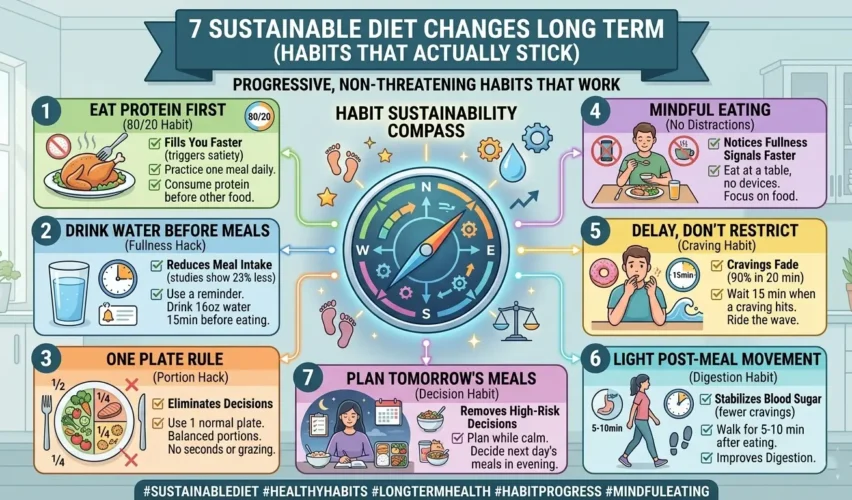
These are the sustainable diet that work because they’re so small, so non-threatening, that your brain doesn’t rebel. Pick one, master it for 2-3 weeks, then add another. This is sustainable diet changes long term done progressively:
1. Eat Protein First (The 80/20 Habit)
At every meal, eat protein-rich food before anything else. Chicken before rice. Eggs before toast. Fish before vegetables. This sustainable diet changes long term habit fills you faster, reduces overall calories, and is almost effortless once established.
Implementation Sustainable Diet: Week 1: Practice at one meal daily (usually lunch). Simply serve protein portion first on your plate. Eat it first. Nothing changes about the food or portion sizes. This sustainable diet changes long term is purely order of consumption.
Why this works: Protein triggers satiety hormones. Eating it first means you’re fuller faster, eating less total food. Research shows this sustainable diet strategy reduces calorie intake by 10-15% without conscious restriction.
2. Drink Water Before Eating (The Fullness Hack)
Drink 16 oz water 15 minutes before meals. This strategy fills your stomach, slows eating speed, and reduces total calories consumed. No special water. No weird hacks. Just water, timing, and consistency.
Implementation for Long Term: Week 1: Set a phone reminder 15 minutes before your largest meal. Drink water. That’s it. This sustainable diet changes long term is literally this simple. Week 2: Add to two meals. By week 3, it’s automatic.
Why this works: Pre-meal water reduces meal intake by 23% in studies. This sustainable diet is one of the easiest documented strategies. No willpower required once the habit establishes.
3. One Plate Rule (The Portion Hack)
Use one plate per meal. No seconds, no grazing, no adding more. This sustainable diet changes long term strategy eliminates portion decisions. Your brain stops calculating how much is “too much” and just eats what’s on the plate.
Implementation for Long Term: Week 1: Use one normal-sized plate at dinner. Fill it with balanced portions (1/4 protein, 1/4 carbs, 1/2 vegetables). Eat until it’s gone. This sustainable diet changes long term removes decision-making from eating.
Why this works: Decision-making drains willpower. This diet changes long term removes the decision. Studies show plate size dramatically impacts consumption without conscious awareness.
4. No Eating While Distracted (The Mindfulness Habit)
Eat at a table, no phone, no TV, no work. Focus only on eating. This sustainable diet changes long term habit slows eating speed, increases satisfaction, and naturally reduces calories because you notice fullness signals faster.
Implementation for Long Term: Week 1: Pick one meal daily where you eat with zero distractions. Just you and food. This sustainable diet changes long term feels weird initially but becomes relaxing once established. By week 2, expand to two meals.
Why this works: Mindful eating takes 20 minutes for satiety signals to register. Distracted eating finishes in 5 minutes, leaving you still hungry. This diet changes naturally leads to eating less while enjoying food more.
5. Delay, Don’t Restrict (The Craving Reduction Habit)
When you crave junk food, don’t say “I can’t eat this.” Instead, say “I’ll eat this at 7pm.” Then do something else. Usually the craving passes before 7pm. This sustainable diet strategy uses psychology instead of willpower—no restriction, just delay.
Implementation for Long Term: Week 1: When cravings hit, delay 15 minutes. Drink water, go for a walk, anything. If you still want it, eat it without guilt. This sustainable diet changes long term teaches your brain that cravings are temporary. By week 4, you’ll notice cravings fade 80% of the time.
Why this works: Cravings pass. Research shows 90% of cravings fade within 20 minutes if you don’t act on them immediately. This isn’t about restriction it’s about riding the wave.
6. Move After Meals (The Digestion Habit)
Walk for 5-10 minutes after eating. This sustainable diet changes long term habit stabilizes blood sugar (reducing cravings), improves digestion, and burns extra calories. The movement is so light it feels effortless, yet the benefits compound significantly.
Implementation for Long Term: Week 1: After your largest meal, take a 5-minute walk. Just around your home or office. This is purely about establishing the habit. Week 2: Extend to 10 minutes if you enjoy it.
Why this works: Post-meal movement reduces blood sugar spikes by 30%. Lower blood sugar = fewer cravings later = easier sustainable diet changes long term overall.
7. Plan What You’ll Eat Tomorrow (The Decision Habit)
Each evening, decide what you’re eating tomorrow. No decisions mid-hunger. This sustainable diet changes long term habit removes the hardest time for eating decisions (when you’re hungry and willpower is depleted). Tomorrow’s decision is made when you’re calm and rational.
Implementation for Long Term: Week 1: Tonight, decide what you’re eating for tomorrow’s lunch. Just lunch. This sustainable diet changes long term removes one high-risk decision. Week 2: Add breakfast planning. By week 3, planning dinner too is automatic.
Why this works: 90% of poor eating decisions happen when you’re hungry, tired, and willpower-depleted. This shifts decisions to when you’re calm. Decisions made while calm are consistently healthier.
Habit Trackers
Tracking sustainable diet changes long term isn’t about perfection. It’s about awareness. Studies show that tracking increases behavior change success by 30-40%. Why? Because writing something down creates accountability without judgment. You’re just observing.
Simple Long Term Tracker
Daily Tracking (takes 30 seconds):
✓ Protein first today?
✓ Water before meals?
✓ One plate rule?
✓ No distracted eating?
✓ Moved after meals?
✓ Planned tomorrow’s meals?
Mark an X for each yes. That’s it. No scoring. No judgment. This tracker is purely observational. After 2 weeks, you’ll notice patterns. “I always miss water before meals” or “I nail the one-plate rule.” This awareness naturally drives improvement.
Weekly Review (takes 5 minutes):
How many X’s did you get this week? Higher each week? That’s sustainable diet changes long term working. Lower some weeks? That’s normal. You’re learning, not failing. One setback week doesn’t erase previous habit-building.
The key with sustainable diet changes long term: Your tracker is a tool for self-awareness, not self-criticism. If you track 3/7 days perfectly and 2/7 days partially, that’s 71% consistency. That’s success, not failure.
Sustainable Diet
Understanding the sustainable diet changes long term timeline helps you stay motivated when progress isn’t linear. Here’s what actually happens:
Week 1-2 (Motivation Phase)
What happens: New sustainable diet changes long term feel exciting. You’re motivated. Results? Usually none yet on the scale.
Your job: Just establish the habits. Don’t expect scale results. Sustainable diet changes long term is about behavior first, results second.
Week 3-4 (Habit Formation)
What happens: Sustainable diet changes long term start feeling automatic. You stop thinking about them. Scale might move slightly.
Your job: Keep tracking. Motivation fades, habits carry you. Sustainable diet changes long term requires consistency, not excitement.
Week 5-8 (Adaptation Phase)
What happens: Body adapts to sustainable diet changes long term. Weight loss steadies. Cravings decrease. Energy stabilizes.
Your job: Add another habit if the first is solid. Sustainable diet changes long term compounds through progressive addition.
Month 3+ (Lifestyle Phase)
What happens: Sustainable diet changes long term become automatic. You stop thinking about them. Weight loss continues steadily.
Your job: Maintain consistency. Sustainable diet changes long term that stick feel effortless by month 3 because habits handle the work.
Why is Beat Traditional Diets
| Factor | Traditional Diets | Sustainable Diet Changes Long Term |
|---|---|---|
| Requires willpower? | Extremely (daily) | Initially, then none (becomes automatic) |
| Foods restricted? | Many (pizza, chocolate, etc.) | None (just timing and amount changes) |
| Sustainability? | 5% success long-term | 66% success long-term |
| Time to results? | 2-4 weeks (then plateaus) | 3-4 weeks (then continues steadily) |
| What happens at setbacks? | Diet fails, spiral begins | One bad day is just one bad day (habits carry you) |
| Long-term weight gain risk? | 95% regain weight | 34% regain weight |
5 Mistakes That Sabotage Sustainable Diet
Mistake #1: Adding Too Many Habits at Once
“I’ll do all 7 habits starting Monday.” By Wednesday you’re overwhelmed. Sustainable diet changes long term works because you add one habit, master it (2-3 weeks), then add another. Small and progressive beats big and overwhelming.
Mistake #2: Expecting Immediate Results
“I’ve been doing this 2 days, why haven’t I lost weight?” Sustainable diet changes long term compounds over weeks, not days. Week 1-2 is about establishing habits, not seeing scale movement. Trust the process.
Mistake #3: One Bad Day = Complete Failure
“I ate pizza Friday, so my sustainable diet changes long term are ruined.” No. One meal doesn’t erase your habits. Sustainable diet changes long term is about 80/20 consistency, not perfection. One bad day is just one bad day.
Mistake #4: Tracking Stops After Two Weeks
Tracking is what makes sustainable diet changes long term visible. Without it, you lose awareness. Keep tracking for at least 3 months. By then habits are automatic and tracking becomes optional, but those first 3 months are crucial for sustainable diet changes long term success.
Mistake #5: Isolating From Support
Sustainable diet changes long term is harder alone. Tell someone. Join a group. Share your tracker. Social accountability dramatically increases sustainable diet changes long term success. You don’t need to be perfect you just need someone who knows what you’re doing.
How to Start
Day 1: Pick One Habit Choose the one sustainable diet changes long term habit that feels easiest for you. Not the most important. The easiest. If you hate water, don’t start with “drink water.” Start with “eat protein first.” This sustainable diet changes long term principle: easy wins first.
Day 2-3: Practice Without Pressure Do the habit. If you forget, no problem. Sustainable diet changes long term doesn’t require perfection. It requires exposure. Repetition. Your brain learns through repetition, not punishment.
Day 4-7: Start Tracking Mark X’s daily. Sustainable diet changes long term tracking is pure observation. You’re not grading yourself. You’re noticing. “I did protein first 5/7 days. Good. Tomorrow I’ll aim for 6.”
Week 2: Consistency Check How many X’s did you get? If it’s 6/7 or 5/7, that’s sustainable diet changes long term establishing. If it’s 2/7, the habit isn’t integrated yet. That’s fine. Keep going. Sustainable diet changes long term doesn’t require immediate perfection.
Week 3-4: Prepare for Second Habit Once sustainable diet changes long term first habit feels automatic (you stop thinking about it), add habit #2. Now you’re stacking sustainable diet changes long term. This is where the magic compounds.
Science Behind It
The research on sustainable diet changes long term is overwhelming. Here’s what studies actually show:
- National Institute of Health – Habit Formation & Behavior Change – How sustainable diet changes long term work through habit formation (66 days average)
- Obesity Journal – Tracking & Weight Loss Success – Why tracking increases sustainable diet changes long term success by 30-40%
- American Journal of Clinical Nutrition – Protein & Satiety – Why sustainable diet changes long term protein-first approach reduces calories naturally
- Appetite Journal – Pre-Meal Water & Portion Control – Evidence for sustainable diet changes long term water strategy reducing intake 23%
Sustainable Diet: Your Path Forward
You now understand why sustainable diet changes long term work better than diets. You have 7 proven habits. You have a tracker. You have a timeline showing what to expect. You have research backing every strategy. What you need now is action.
Pick one sustainable diet changes long term habit. The easiest one. Start this week. Not Monday, not next month. This week. Commit for 3 weeks. Then add another. This is sustainable diet changes long term done right.
The difference between people who lose weight and keep it off versus people who yo-yo forever comes down to one thing: they chose sustainable diet changes long term instead of another diet. They trusted the process. They stayed consistent. They gave their brain time to adapt.
Sustainable diet changes long term isn’t glamorous. It’s boring, actually. You’re just doing the same small behaviors over and over. But that’s why it works. Your brain loves boring repetition. After 66 days, your brain loves these behaviors. After 6 months, you can’t imagine eating any other way. That’s sustainable diet changes long term. That’s weight loss for life.
Top 10 Foods That Improve Mood Naturally