Throwing away food isn’t just wasteful it’s throwing away money you’ve already spent. You know this because you’ve seen it happen: wilted greens in the crisper drawer, vegetable scraps tossed in the trash, chicken bones discarded instead of becoming stock. Your kitchen produces waste not because you’re careless, but because conventional cooking ignores the most nutrient-dense, flavorful parts of ingredients. A zero waste diet meal approach changes everything, transforming what you used to throw away into complete meals that cost less and taste better.
The zero waste diet meal strategy isn’t about deprivation or eating things that taste bad. It’s about recognizing that broccoli stems have more fiber than florets, that carrot tops make brilliant pesto, and that vegetable scraps create stock richer than anything you can buy. I’m sharing the complete zero waste diet meal system how to use every part of vegetables, proteins, and grains, specific use-every-part recipes like veggie stem stir-fries, and meal planning frameworks that eliminate waste from your kitchen entirely.
Why Zero Waste Diet Meal Planning Matters More Than You Think
The average household throws away 30-40% of food purchased. That’s not just environmental waste it’s financial waste. If you spend $600 monthly on groceries, you’re literally throwing $180-240 into the garbage. Zero waste diet meal planning prevents this by designing meals that use ingredients completely, from root to stem, from bone to skin.
Research from the Natural Resources Defense Council shows that zero waste diet meal strategies reduce household food waste by 60-75% within the first month of implementation. This isn’t about extreme minimalism or eating things you hate. Zero waste diet meal planning simply means using what you buy instead of discarding edible, nutritious parts out of habit or ignorance.
Vegetable stems, peels, and tops contain more fiber, minerals, and sometimes more flavor than the parts you’re used to eating. Zero waste diet meal recipes incorporate these deliberately.
Meat bones, vegetable scraps, and herb stems create stocks that form the foundation of zero waste diet meal planning transforming “waste” into liquid gold that becomes soup, sauce, and cooking liquid.
Stale bread, wilted greens, and overripe fruit aren’t garbage in zero waste diet meal systems they’re ingredients for breadcrumbs, pesto, and smoothies that taste better than versions made with “perfect” produce.
Meal planning from whole ingredients rather than pre-cut convenience foods naturally supports zero waste diet meal strategies because you control what gets used and what gets saved for future meals.
Why Veggie Stem Stir-Fries are the Core of Zero Waste Diet Meal Success
Vegetable stems are the most commonly wasted edible parts in conventional cooking. Broccoli stems get tossed while florets go in the pan. Kale stems are stripped and discarded. Mushroom stems are cut off and thrown away. This is backwards. Stems often contain more nutrients, fiber, and structural integrity than the tender parts making them ideal for zero waste diet meal preparations like stir-fries where texture matters.
Pure vegetable scraps alone don’t create satisfying zero waste diet meal stir-fries—they need protein, aromatics, sauce, and proper cooking technique. But when you understand that stems are ingredients rather than waste, your zero waste diet meal options expand dramatically while your grocery costs drop.
Vegetable Stems You Should Be Eating in Zero Waste Diet Meal Plans
Broccoli and Cauliflower Stems taste sweeter and more tender than florets when peeled and sliced properly. For zero waste diet meal stir-fries, peel the tough outer layer with a vegetable peeler, then slice the tender inner stem into coins or matchsticks. They cook faster than florets and add satisfying crunch.
Kale and Collard Stems are too fibrous to eat raw but become tender and slightly sweet when cooked. For zero waste diet meal preparations, slice stems thinly on the bias and add them to your pan 2-3 minutes before the leaves. They provide structure that prevents your greens from becoming mushy.
Mushroom Stems (especially shiitake and portobello) have intense umami flavor but tougher texture than caps. For zero waste diet meal recipes, mince them finely or slice thin and cook them longer than caps. They create depth in stir-fries, stocks, and sauces that caps alone can’t achieve.
Chard Stems are the most underrated part of this vegetable. They taste similar to celery with slight bitterness. For zero waste diet meal stir-fries, separate stems from leaves, chop stems into half-inch pieces, and cook them first with garlic and ginger. Add the leaves only in the final minute. This technique keeps everything properly textured.
Asparagus Stems get unnecessarily trimmed. The “woody” bottom inch is genuinely tough, but the middle section (which people often discard) is perfectly edible. For zero waste diet meal planning, peel the lower half of asparagus stems with a vegetable peeler. The tender interior cooks beautifully and wastes nothing.
Zero Waste Diet Meal: Master Veggie Stem Stir-Fry Recipe
This recipe represents zero waste diet meal philosophy perfectly using parts you’d normally throw away to create something better than conventional recipes. This veggie stem stir-fry costs about $2.50 per serving compared to $6-8 for restaurant versions, tastes fresher, and wastes absolutely nothing.
Ingredients for Zero Waste Diet Meal Stir-Fry (Serves 4):
• Stems from 2 bunches broccoli (peeled and sliced into coins) • Stems from 1 bunch kale or chard (sliced thin on bias) • Stems from 8oz mushrooms (minced or sliced thin) • 2 carrots (peeled save peels for stock sliced into matchsticks) • 1 bell pepper (any color, sliced) • 3 cloves garlic (minced) • 1-inch fresh ginger (minced) • 2 tablespoons neutral oil (vegetable or avocado) • 12oz protein of choice (tofu, chicken thighs, or shrimp see protein zero waste diet meal tips below)
Sauce for Zero Waste Diet Meal Stir-Fry:
• 3 tablespoons soy sauce or tamari • 1 tablespoon rice vinegar (or any vinegar you have) • 1 tablespoon honey or brown sugar • 1 teaspoon sesame oil • 1 teaspoon cornstarch mixed with 2 tablespoons water • Pinch red pepper flakes
Instructions for This Zero Waste Diet Meal Recipe:
Heat wok or large skillet over highest heat your stove produces. Add 1 tablespoon oil and swirl to coat. This high heat is essential for zero waste diet meal stir-fries it prevents vegetables from steaming and becoming soggy.
Add broccoli stems, kale stems, and carrot matchsticks first. These are the toughest vegetables in your zero waste diet meal stir-fry. Cook for 3-4 minutes, stirring constantly, until they develop slight char and begin to soften. The stems should still have bite they won’t become as tender as florets, and that’s intentional.
Push vegetables to the side of your pan. Add remaining tablespoon of oil to the cleared center. Add minced garlic, ginger, and mushroom stems. Cook for 30 seconds until fragrant this creates the aromatic base of your zero waste diet meal stir-fry. Don’t let garlic burn.
Add bell pepper and your chosen protein (if using pre-cooked protein, add it later). Stir everything together. Cook for another 3-4 minutes, stirring frequently, until protein is cooked through and peppers are tender-crisp.
Pour sauce mixture over everything. The cornstarch will thicken immediately as it hits the hot pan. Toss vigorously for 30-60 seconds until every piece is coated and sauce has thickened into a glossy glaze. This is what makes zero waste diet meal stir-fries restaurant-quality.
Remove from heat immediately. Overcooking at this stage makes vegetables mushy and defeats the purpose of using structural stem vegetables in your zero waste diet meal recipes.
Nutrition Profile of This Zero Waste Diet Meal Stir-Fry:
• Calories: 280 per serving (with tofu), 320 with chicken • Fiber: 6g (significantly higher than conventional stir-fries because stems contain more fiber than florets) • Protein: 18-24g depending on protein choice • Cost: $2.50 per serving vs. $6-8 restaurant equivalent • Food waste: Zero every part of vegetables used
Why This Zero Waste Diet Meal Recipe Works: The combination of stem vegetables creates texture variation impossible with florets alone. Broccoli stems provide crunch. Kale stems add slight chew. Mushroom stems create umami depth. Together, they form a zero waste diet meal that’s more satisfying than conventional stir-fries while costing less and wasting nothing.
Zero Waste Diet Meal: Complete Protein Strategy
Vegetables aren’t the only ingredients wasted in conventional cooking. Protein scraps chicken bones, meat trim, fish bones, even tofu water become valuable components in zero waste diet meal planning when you know how to use them.
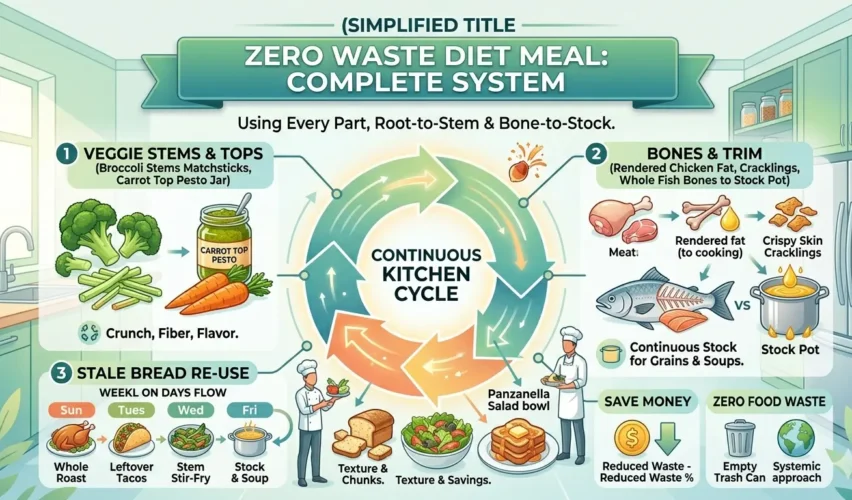
Chicken Thighs for Zero Waste Diet Meal Planning Bone-in, skin-on chicken thighs cost less than boneless, skinless, and provide more for zero waste diet meal systems. Remove bones before cooking (or after) and freeze them for stock. Render the skin separately in a pan until crispy—this creates chicken cracklings for salads and pure chicken fat for cooking vegetables. One package of bone-in thighs becomes: cooked chicken for stir-fry, bones for stock, rendered fat for cooking, crispy skin for garnish. That’s four ingredients from one purchase the essence of zero waste diet meal planning.
Whole Fish for Zero Waste Diet Meal Strategies Buying whole fish instead of fillets saves 40-60% on cost while providing bones and heads for stock. For zero waste diet meal planning, have your fishmonger fillet the fish but give you the bones and head. Use fillets for your main meal, simmer bones for fish stock (20 minutes is sufficient fish stock doesn’t need hours like chicken stock). Fish stock becomes the base for soups, risotto, and braising liquid in future zero waste diet meal preparations.
Tofu Water for Zero Waste Diet Meal Recipes The liquid in tofu packages is often lightly salted soy water perfectly usable. For zero waste diet meal planning, don’t pour it down the drain. Use it as part of the liquid in sauces, marinades, or smoothies. It adds subtle flavor and provides free liquid for cooking.
Zero Waste Diet Meal: Stock as Foundation
Stock is the single most important element in zero waste diet meal planning. It transforms vegetable scraps, bones, and aromatics you’d otherwise discard into concentrated flavor that becomes the foundation of dozens of meals. Every zero waste diet meal system should include continuous stock production.
The Zero Waste Diet Meal Stock Method:
Keep a gallon freezer bag in your freezer. Every time you cook, add vegetable scraps to this bag: onion skins, carrot peels, celery ends, mushroom stems, herb stems (parsley, cilantro, thyme), garlic skins, ginger scraps, kale stems (if not using for stir-fry), broccoli stems you don’t want to eat. This is your zero-waste diet meal stock bag.
When the bag is full, dump contents into a large pot. Add any bones you’ve saved (chicken, beef, pork, or fish). Cover with water. Add 1 tablespoon vinegar (helps extract minerals from bones). Bring to a boil, then reduce to the lowest simmer possible. Cook for 2-12 hours depending on what you’re making vegetable stock needs only 2 hours, chicken stock benefits from 6-8 hours, beef stock develops best flavor after 12+ hours.
Strain through fine-mesh strainer. Let cool. Portion into containers 1-cup portions for sauces, 4-cup portions for soups. Freeze what you won’t use within 5 days. This stock costs approximately $0.15 per cup (just the energy cost of simmering) compared to $2-3 per cup for quality store-bought stock. It tastes better because it’s made from fresh scraps rather than industrial byproducts. This is zero-waste diet meal planning at its most powerful.
Using Zero Waste Diet Meal Stock:
Replace water with stock in every recipe that calls for liquid: cooking grains (rice, quinoa, farro), braising vegetables, making sauces, cooking beans, deglazing pans. Stock adds depth to zero waste diet meal preparations that water simply cannot provide. A simple pot of rice cooked in stock becomes a side dish worth eating on its own. Beans simmered in stock taste like they’ve been cooking with ham hocks even if they haven’t.
Zero Waste Diet Meal: Carrot Top Pesto Recipe
Carrot tops are edible and slightly bitter similar to parsley with earthy undertones. Most people throw them away without realizing they’re creating waste. For zero waste diet meal planning, carrot top pesto transforms this “waste” into a sauce that rivals basil pesto while costing nothing beyond the carrots you already bought.
Ingredients for Zero Waste Diet Meal Carrot Top Pesto:
• Tops from 2 bunches carrots (about 2 cups packed leaves) • 1/2 cup nuts (walnuts, almonds, or sunflower seeds use what you have) • 2 cloves garlic • 1/2 cup olive oil • 1/3 cup parmesan cheese (or nutritional yeast for vegan zero waste diet meal version) • Juice of half a lemon • Salt and black pepper to taste
Instructions for This Zero Waste Diet Meal Pesto:
Wash carrot tops thoroughly they often have dirt. Remove any yellowed or slimy leaves (compost these, don’t force yourself to eat spoiled food in the name of zero waste diet meal planning).
Toast nuts in dry skillet for 3-4 minutes until fragrant. This step is optional but dramatically improves flavor in zero waste diet meal recipes.
Combine carrot tops, toasted nuts, garlic, parmesan, and lemon juice in food processor. Pulse until roughly chopped. With processor running, slowly drizzle in olive oil until pesto reaches desired consistency. Taste and adjust salt and pepper.
Store in refrigerator for up to one week, or freeze in ice cube trays for individual portions. Each frozen pesto cube becomes instant sauce for future zero waste diet meal preparations.
Uses for Zero Waste Diet Meal Carrot Top Pesto:
Toss with pasta (obviously), spread on sandwiches, use as marinade for chicken or fish, stir into scrambled eggs, thin with additional olive oil for salad dressing, spread on pizza before adding toppings. One batch of carrot top pesto provides flavor for 6-8 meals that’s the multiplier effect of zero waste diet meal planning.
Zero Waste Diet Meal: Bread Waste Strategy
Bread goes stale faster than almost any food, and most households throw away heels, stale slices, and old baguettes regularly. For zero waste diet meal planning, stale bread isn’t waste it’s an ingredient that performs better than fresh bread in many applications.
Breadcrumbs for Zero Waste Diet Meal Recipes Tear stale bread into chunks. Toast in 300°F oven for 15-20 minutes until completely dry and lightly golden. Process in food processor until you reach desired texture coarse for topping casseroles, fine for breading proteins. Store in airtight container at room temperature for 3 months or freeze indefinitely. These breadcrumbs cost nothing (you made them from waste) and taste better than store-bought because you control the seasoning. Use them for zero waste diet meal preparations like breaded chicken, topping for gratins, binding for meatballs, or thickening soups.
Panzanella Salad: Peak Zero Waste Diet Meal Panzanella is literally a salad designed to use stale bread—Italian peasant food at its finest. Cube stale bread and toss with ripe tomatoes, cucumber, red onion, fresh basil, olive oil, and red wine vinegar. Let sit for 30 minutes so bread absorbs the tomato juices and dressing. The bread rehydrates from the vegetables while adding texture. This is zero waste diet meal philosophy in action—creating something delicious specifically because an ingredient is “expired.”
French Toast as Zero Waste Diet Meal Breakfast Stale bread makes better French toast than fresh because it absorbs the egg mixture without falling apart. For zero waste diet meal breakfast planning, save bread heels and stale slices specifically for French toast weekends. The slightly dry texture becomes creamy and custardy when soaked in egg and milk, producing French toast with structure instead of sogginess.
Zero Waste Diet Meal: Weekly Planning System
Effective zero waste diet meal planning requires thinking in systems, not individual recipes. You’re planning how ingredients flow from one meal to the next, how “waste” from dinner becomes stock for tomorrow’s soup, how vegetable stems from Monday’s prep become Wednesday’s stir-fry.
Sunday Prep for Zero Waste Diet Meal Week
Roast one whole chicken. Serve it for Sunday dinner with roasted vegetables. Strip remaining meat from bones after dinner. Freeze bones and vegetable scraps for stock. Shred leftover chicken for Tuesday’s tacos and Thursday’s fried rice. This is zero-waste diet meal planning: one ingredient, three meals, zero waste.
Wash and prep all vegetables for the week. Separate stems from leafy greens. Store stems in container specifically labeled for Wednesday’s zero-waste diet meal stir-fry. Store leaves for salads and quick sautés. Save all peels, ends, and scraps in your freezer stock bag.
Cook large batch of grains rice, quinoa, or farro. Use stock instead of water (see how zero waste diet meal elements connect?). Portion into containers. These become bases for grain bowls, additions to soups, and side dishes throughout the week.
Monday Through Friday: Zero Waste Diet Meal Flow
Monday – Sheet Pan Dinner: Roast whatever vegetables need using before they spoil. Save the roasted vegetable scraps and pan drippings for stock. The slightly caramelized bits have concentrated flavor that makes your zero waste diet meal stock superior.
Tuesday – Tacos with Sunday’s Chicken: Use shredded chicken from Sunday’s roast. Make pico de gallo from tomatoes, onions, cilantro. Save cilantro stems for stock bag. Use stale tortilla chips (if any) crushed as taco topping texture and zero waste diet meal strategy combined.
Wednesday – Veggie Stem Stir-Fry: This is where your zero waste diet meal prep pays off. Grab the container of vegetable stems you’ve been collecting. Follow the master stir-fry recipe above. Dinner on the table in 15 minutes using ingredients that would have been garbage.
Thursday – Fried Rice with Leftover Grains: Use Monday’s and Tuesday’s leftover rice (fried rice works better with day-old rice anyway). Add remaining chicken from Sunday, any wilted vegetables from your crisper drawer, and that one egg leftover from breakfast. This is zero waste diet meal planning at its most practical specifically creating a meal from fragments.
Friday – Stock and Soup: Make stock from your freezer bag of scraps and Sunday’s chicken bones. While it simmers (4-6 hours, unattended), go about your day. Strain the stock in the evening. Use 4 cups immediately to make simple soup stock plus any vegetables that need using plus noodles or beans. You’ve just created Friday dinner from literal garbage. The remaining stock goes in the freezer for future zero waste diet meal preparations.
Zero Waste Diet Meal: Produce Storage to Prevent Waste
Zero waste diet meal planning isn’t just about using scraps it’s about preventing waste in the first place. Proper storage extends produce life by days or even weeks, reducing how much you throw away before it can be used.
Leafy Greens for Zero Waste Diet Meal Longevity: Wash greens when you bring them home. Dry completely using salad spinner. Store in container lined with paper towels to absorb excess moisture. This prevents the slime that ruins greens. Properly stored greens last 7-10 days instead of 3-4, giving you more time to incorporate them into zero-waste diet plans.
Herbs in Water for Zero Waste Diet Meal Planning: Treat herbs like flowers. Trim stems and place in jar with 1 inch of water. Cover loosely with plastic bag. Store in refrigerator. This keeps herbs fresh for 2+ weeks. When they finally start declining, strip leaves and freeze them in olive oil in ice cube trays instant herb cubes for future zero-waste diet cooking.
Root Vegetables in Sand: If you buy bulk root vegetables (carrots, beets, turnips), store them in a container of damp sand in your basement or coolest cabinet. This is how they’re stored commercially. They’ll last 3-6 months, eliminating waste from spoilage entirely. This is extreme zero-waste diet planning but remarkably effective if you have storage space.
Mistakes People Make With Zero Waste Diet Planning
Mistake #1: Trying to Use Everything Immediately. You don’t need to use every scrap the day you create it. The freezer stock bag system works because it accumulates ingredients gradually. Don’t stress about creating zero-waste diet meal recipes from every single stem on the day you prep vegetables. Collect them, then use them strategically when you have time for that veggie stem stir-fry.
Mistake #2: Forcing Yourself to Eat Spoiled Food. Zero waste diet meal planning means using edible parts before they spoil it doesn’t mean eating rotten food. If something has gone truly bad (slimy, moldy, smelling off), compost it or throw it away. Don’t make yourself sick trying to achieve perfect zero-waste diet meal adherence.
Mistake #3: Not Planning Meals That Use Scraps. Collecting vegetable stems and bones is useless if you never actually make stock or stir-fries. Zero-waste diet meal planning requires building recipes into your routine that specifically use the scraps you’re saving. Schedule veggie stem stir-fry night weekly. Make stock monthly. Create systems, not just intentions.
Mistake #4: Buying Too Much Food to Begin With. The best zero-waste diet meal strategy is buying only what you’ll actually use. Shop your refrigerator before going to the store. Plan meals around what’s already aging in your crisper drawer. Zero waste diet meal planning starts at the grocery store, not in your kitchen.
The Research Behind Zero Waste Diet Meal Strategies
The evidence supporting zero-waste diet meal approaches is extensive. Research shows both environmental and financial benefits:
Natural Resources Defense Council – Food Waste Studies: Demonstrates that zero waste diet meal planning reduces household food waste by 60-75% within first month.
Journal of Nutrition Education and Behavior – Meal Planning and Food Waste: Shows families using zero-waste diet meal systems spend 25-30% less on groceries while maintaining nutritional quality.
Environmental Science & Technology – Vegetable Scraps as Nutrition: Documents that stems, peels, and tops often contain higher concentrations of fiber, minerals, and antioxidants than the conventionally eaten parts making zero-waste diet meal recipes potentially more nutritious.
Related Reading for Complete Zero Waste Diet Meal Success
Now that you understand zero-waste diet meal planning fundamentals, expand your knowledge with related strategies:
Healthy Snacks for Kids No Sugar: Learn about using vegetable scraps and overripe fruit in healthy snacks that reduce waste while feeding children nutritiously. Connection to zero-waste diet meal planning through fruit waste reduction.
Batch Cooking Systems: Deep dive into cooking large quantities of grains, proteins, and stocks that form the foundation of zero-waste diet planning. Learn storage, portioning, and reheating strategies.
Composting for Kitchen Scraps: What to do with the truly inedible parts. Even with perfect zero-waste diet meal planning, some materials (avocado pits, citrus peels, onion skins) are better composted than eaten. Learn how to close the loop completely
Master Zero Waste Diet Meal Planning for Your Kitchen
You now understand the complete zero-waste diet meal system. You know that vegetable stems, meat bones, stale bread, and carrot tops aren’t waste they’re ingredients waiting to be used correctly. You understand why veggie stem stir-fries work better than conventional versions. You have the exact recipes that transform scraps into meals costing 60-75% less than restaurant equivalents.
The choice between conventional cooking and zero-waste diet meal planning comes down to habits versus systems. Conventional cooking follows recipes in isolation you make Monday’s dinner without thinking about Wednesday’s ingredients. Zero waste diet meal planning connects meals across the week, planning how Sunday’s roast chicken becomes Tuesday’s tacos and Friday’s soup stock.
Start implementing zero waste diet meal strategies this week. Save your vegetable stems in a container instead of throwing them away. Try the master veggie stem stir-fry recipe on a night when you need dinner fast. Feel the satisfaction of creating something delicious from parts you used to discard. Once you experience how much better zero waste diet meal planning works tastier food, lower costs, less guilt about waste you’ll never go back to conventional cooking habits.
Budget Family Healthy Meal Prep Under $50